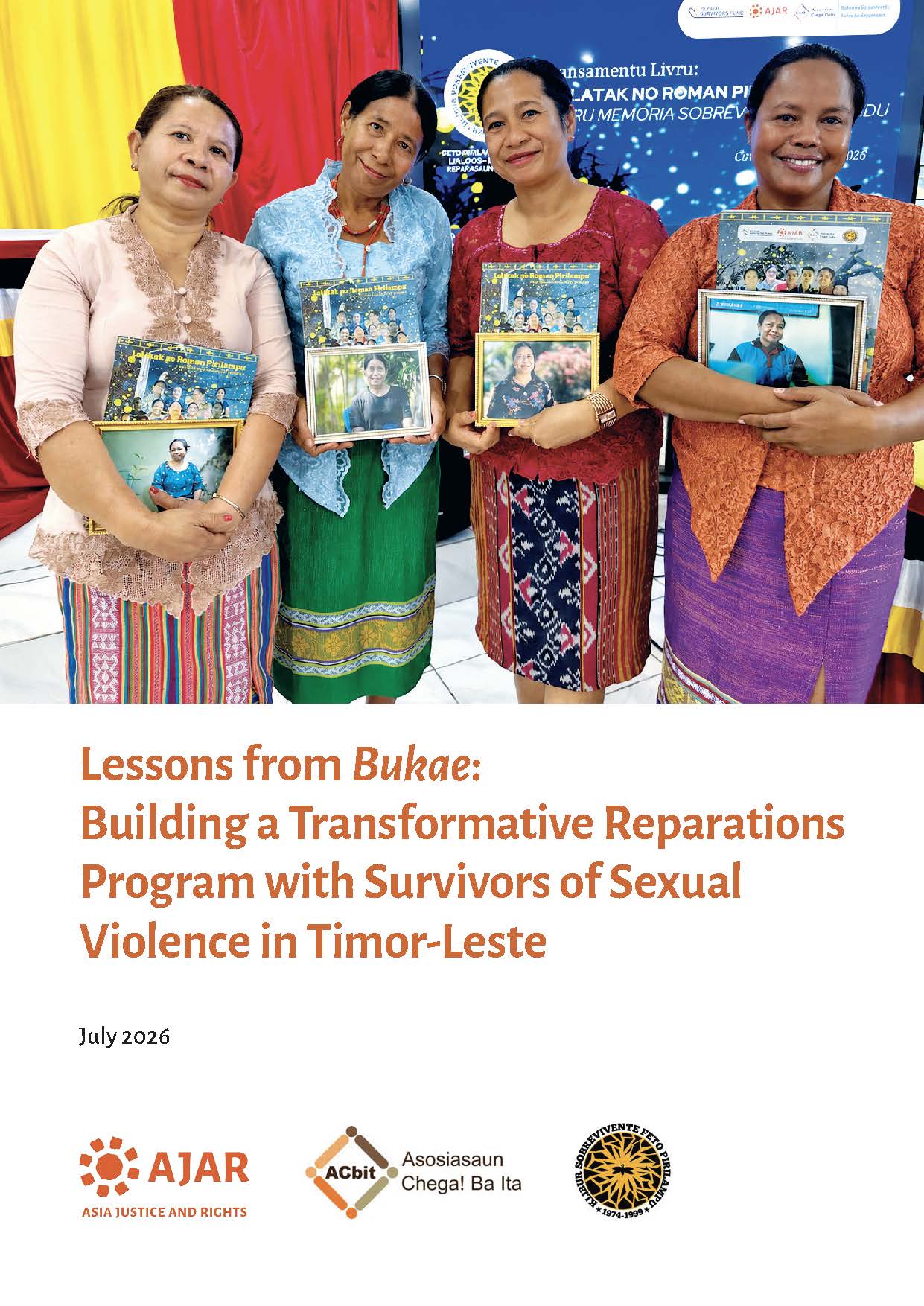
For more than two decades after Timor-Leste’s independence, hundreds of survivors of conflict-related sexual violence remained largely invisible—living with trauma, poverty, poor health, and continued discrimination, while waiting for the promises of truth commissions to become reality. Lessons from Bukae documents what happened when reparations were designed with survivors, rather than for survivors.
Drawing on three years of implementation of the Bukae program (2023–2026), the paper shares ten practical lessons from working alongside 455 survivors and children born of war across all 13 municipalities of Timor-Leste. It shows why reaching the most marginalised requires trusted local women and survivor leaders; why reparations must combine immediate material support with recognition, memory, healthcare and collective organising; why the voices of children born of war and male survivors must no longer be ignored; and how survivor-led advocacy has helped renew momentum for a national reparations law.
Through this grounded approach, reparations are not simply about compensating past harm. They are about rebuilding dignity, strengthening survivor leadership, challenging gender inequality, and building capacity for the next generation to end impunity for gender-based violence. While rooted in Timor-Leste, the lessons from Bukae offer practical insights for governments, civil society organisations, donors and survivor movements seeking to develop transformative reparations programs in other settings.
Download the paper in English:
A short video of the survivors stories documented during Bukae Program, titled Bukae: Sobrevivente La’o ba Justisa (Survivors Walking Towards Justice) is available in AJAR’s YouTube.