Berlin, Germany, October 2025 – In the time of global democratic retreat, shrinking civic spaces, and rising authoritarianism, practitioners dedicated for truth, justice and reconciliation are confronting increasingly complex challenges. The erosion of human rights standards and deepening inequality worldwide threaten the decades of progress in peacebuilding and transitional justice.
In response to the current dynamics, the Global Learning Hub for Transitional Justice and Reconciliation convened practitioners, activists, and experts globally for the Practitioners’ Conference 2025, held in Berlin, Germany, from October 21 to 22, 2025. The conference, themed “Transformative Transitional Justice in Practice: Confronting Challenges, Recognising Successes,” provided as a platform for connection, learning, and collaboration.
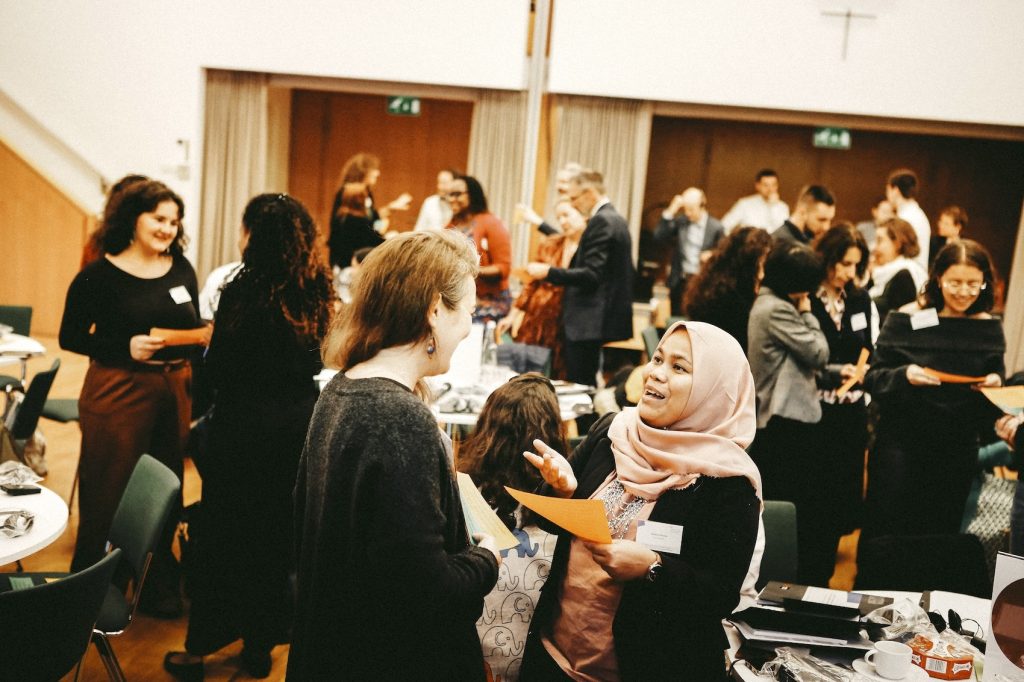
Asia Justice and Rights (AJAR), a member of the Global Learning Hub, facilitated the participation of members of the Transitional Justice Asia Network (TJAN). The TJAN participants included Azharul Husna (KontraS Aceh, Indonesia); Dedek Putri Mufarohha (Yayasan SAKA, Indonesia); Domingas Da Silva (ACbit, Timor-Leste); and Sheila Grace Farmento (Alternative Legal Group or ALG, Philippines). AJAR was also represented by Alarie, Myanmar Country Manager, and Indria Fernida, Regional Program Manager.
The two-day conference gathered over 80 practitioners from 14 countries to exchange experiences and strengthen collective action in addressing legacies of violence and human rights violations. Discussions explored transformative transitional justice, defining it as a people-centred, inclusive, and long-term effort for structural change, moving beyond a merely technical process.
Discussions were structured around four key themes workshop:
- Inclusive participation: focused on ensuring survivors and affected communities lead and shape justice processes;
- Trauma-informed intergenerational approaches: recognised the impact of past violence legacies on new generations;
- (Re)distributive justice and collective reparations: discussed measures for addressing structural inequalities and promoting equity through reparative measures; and
- Social movements and activism: explored how grassroots initiatives and collective action expand the scope of justice and transformation.
Within the Social Movements and Activism session, Alarie shared insights from Myanmar’s Civil Disobedience Movement (CDM). She detailed how nonviolent resistance has promoted unity, fostered solidarity, and strengthened civic engagement. She also highlighting lessons on the efficacy of collective nonviolent action, rapid mobilisation, decentralised coordination, and cross-group solidarity.
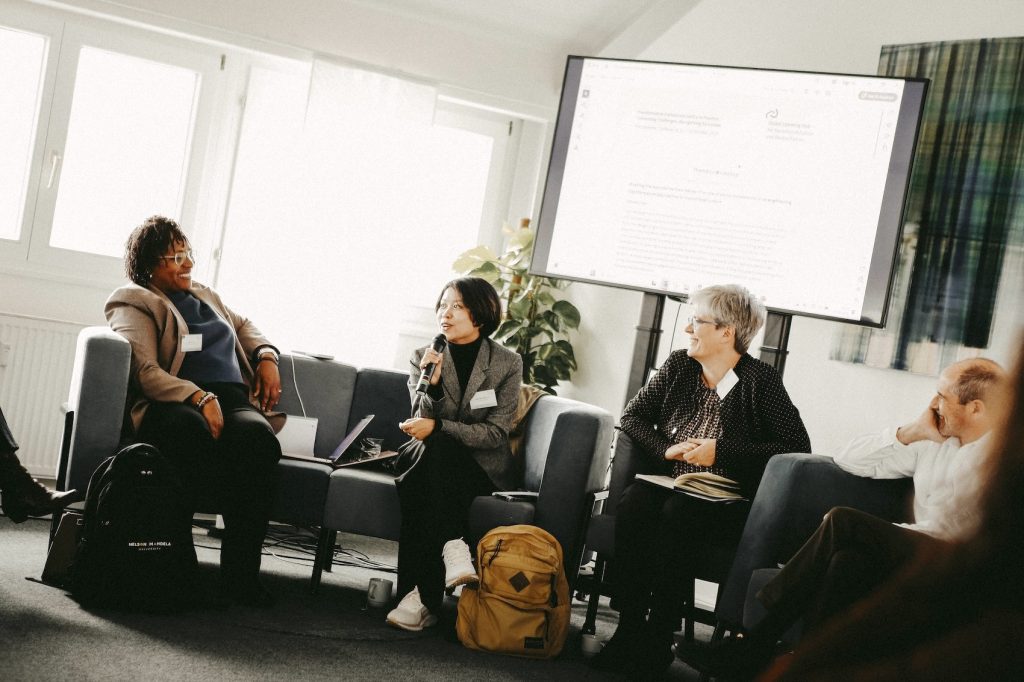
The event concluded with a public policy session, “A Beacon of Hope – Transitional Justice in Uncertain Times,” where practitioners engaged with policymakers and international partners. Barney Afako, a member of the Commission on Human Rights in South Sudan, delivered a keynote speech that emphasised the continued relevance of transitional justice. He called for solidarity, local ownership, and adaptability amid political and financial constraints. The session highlighted the importance of locally grounded knowledge and experience in shaping responsive and transformative policy frameworks. Representing Asia, Sheila Grace Farmento (ALG) shared reflections on advancing alternative and transformative justice initiatives and strengthening solidarity among grassroots actors through regional alliances across ASEAN.
The conference reaffirmed the crucial role of collaboration and shared learning in advancing transformative justice globally. For the TJAN, the event provided an opportunity to contribute regional perspectives, deepen connections with global peers, and strategise on sustaining justice work in the face of growing challenges. Reflecting on the event, Domingas da Silva (ACbit), stated:
The transitional justice process moves beyond merely addressing past violations and actively promotes social recovery, transformation, and peaceful coexistence. The conference emphasised the importance of a victim-centred, inclusive, and gender-responsive approach that promotes accountability, recognition, dignity, and healing while preventing recurrence of violations.
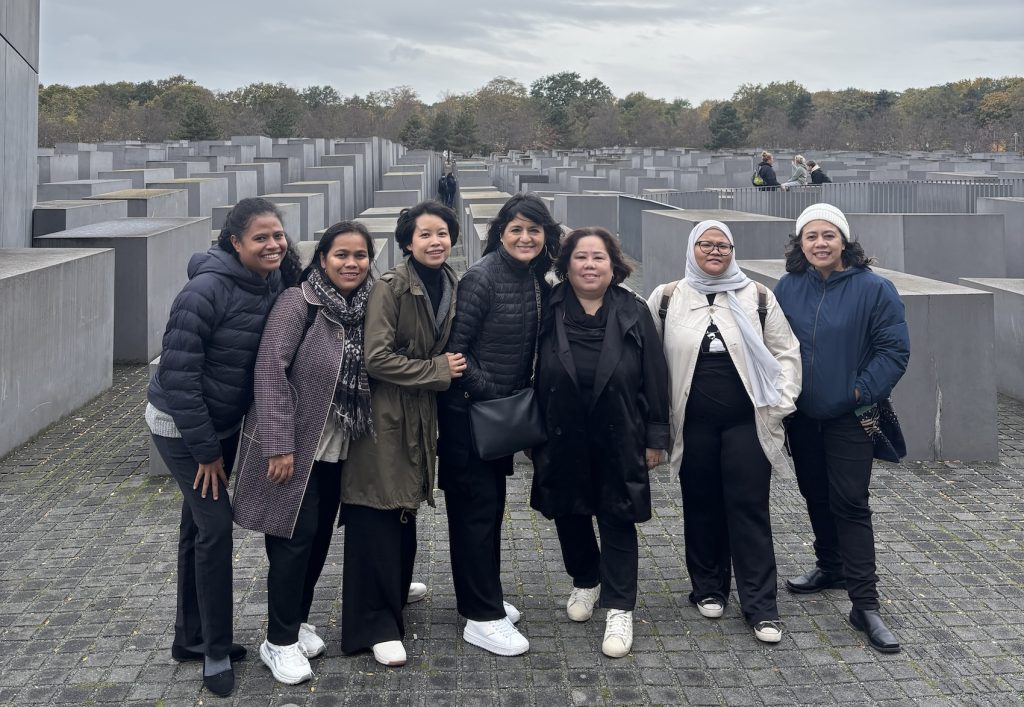
TJAN members also engaged in learning about preserving memory in Berlin through site visits to the Museum Island, Bebelplatz Book Burning, Humboldt University, Checkpoint Charlie, Hitler’s Bunker Site, Holocaust Memorial, and Brandenburg Gate.