CHIANG MAI, Thailand, 14- 16 August 2026 — Asia Justice and Rights (AJAR), together with the Spirit in Education Movement (SEM) and Amnesty International Thailand, presented the “Journey Toward Justice” exhibition and Lann Sone Music Evening during the 5th International Conference on Burma/Myanmar Studies (ICBMS 5) at Chiang Mai University.
Bringing together art, community experiences and music, the programme created an alternative space within the academic conference to reflect on Myanmar’s continuing crisis and the meaning of justice. It invited participants to engage not only with the violence, displacement and repression experienced by communities, but also with their resilience, dignity, solidarity and hopes for a different future.
A Journey Through Truth, Accountability, Healing and Hope
The Journey Toward Justice exhibition was organized around four interconnected dimensions of transitional justice: Truth; Accountability; Reparation, Healing and Resilience; and Non-Recurrence and Hope.
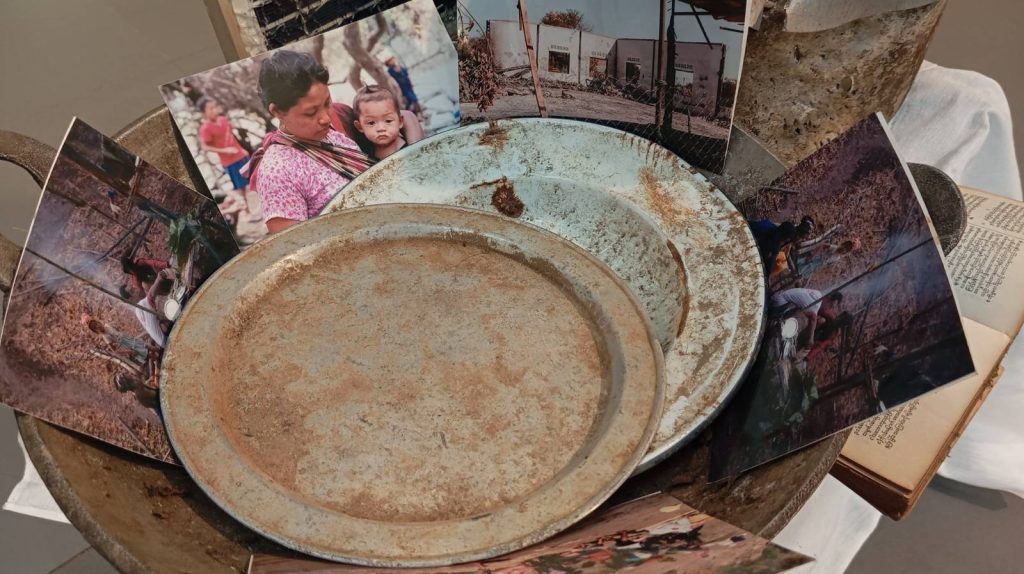
Rather than explaining these ideas mainly through legal or academic language, the exhibition used photographs, paintings, community materials, everyday objects, quotations and reflective questions to connect transitional justice with lived experiences.
Visitors were encouraged to consider simple but fundamental questions: What happened? Who is responsible? How can wounds be repaired? And how can cycles of violence be prevented from happening again?
Through these questions, the exhibition highlighted that justice is not only about courts or punishment. It is also about recognizing harm, preserving memory, listening to affected communities, restoring dignity, supporting healing, reforming institutions and creating conditions in which violations will not be repeated.
The exhibition also emphasized the role of communities. Amid the prolonged crisis of Myanmar, people continue to establish mutual aid networks, provide education and humanitarian assistance, support survivors, preserve cultural identity and create new forms of resistance and solidarity.
Connecting Justice and Solidarity Through Music
On the evening of 16 August, the programme continued through the Lann Sone Music Evening, bringing participants together after the formal conference sessions.
Featuring performances by Shu Shu, Patrick Burgess, Ma Shwe, Broody’s and Mu Shi, with Theint Theint as presenter, the evening created a shared cultural space around memory, identity, belonging, resilience and hope.
For Myanmar artists and musicians living in Thailand and across the diaspora, art and music have become important ways of preserving memory and identity, expressing grief and resistance, and maintaining connections with communities affected by conflict and displacement.
The music evening therefore became more than entertainment. It complemented the exhibition by allowing participants to experience solidarity collectively through music, emotion and cultural expression.
Bringing Transitional Justice Beyond the Conference Room
ICBMS 5 brought together a diverse community of scholars, researchers, students, civil society organizations, human rights defenders, activists, artists, community representatives and international actors. Approximately over 1000 participants were attended across the conference.
Within this setting, Journey Toward Justice helped connect academic discussions with the realities and experiences of communities affected by Myanmar’s crisis. It also demonstrated how art and culture can make complex questions of justice more accessible to audiences beyond specialized legal and policy spaces.
For AJAR and its partners, the initiative reinforced an approach to transitional justice that places survivors and communities at the center while recognizing the importance of memory, dignity, creativity, healing and collective action.
The journey toward justice does not begin only when formal transitional justice mechanisms are established. It is already taking place when communities document the truth, survivors are heard, people care for one another, artists preserve memory, musicians sustain identity, discrimination is challenged, and people continue to imagine a Myanmar grounded in dignity, equality, diversity, accountability, peace and justice.
Journey Toward Justice reflected these continuing efforts inside Myanmar, along its borders and across the diaspora to resist injustice, preserve memory and build hope for a more just and peaceful future.