Banda Aceh, Indonesia, August 2025 – Twenty years have elapsed since the signing of the Helsinki Memorandum of Understanding (MoU)–the peace agreement between the Government of Indonesia and the Free Aceh Movement (GAM), signed on August 15, 2005. The people of Aceh continue to honour peace, transforming Aceh from a prolonged conflict into a model of resilience and dialogue-based conflict resolution. It underscores the role of political commitment and sustained efforts toward accountability. To mark this milestone, Asia Justice and Rights (AJAR) and KontraS Aceh, in collaboration with the Transitional Justice Asia Network (TJAN), organised a week-long series of events under the theme Nurturing Peace, Preserving Memory, and Strengthening the Future.
The Aceh Peace Agreement is recognised as a significant example of negotiated peace in Southeast Asia. It concluded nearly 30 years of armed conflict, paved the way for political reform, a truth-seeking mechanism, and the establishment of the first official truth commission in Indonesia, the Aceh Truth and Reconciliation Commission (Aceh TRC).
Over the past twenty years, survivors, women’s groups, civil society organisations, and local institutions have carried forward the spirit of peace through initiatives focused on documentation, truth-telling and memorialisation of past mass violations. However, the implementation of justice-related measures remains incomplete. A number of the recommendations from the Aceh TRC finding report are yet to be implemented, and victims await reparations and official recognition.
Despite these challenges, the Aceh peace process provides a powerful lesson for Indonesia and the region. It demonstrates the viability of achieving peace through dialogue, decentralisation, and inclusive governance. It highlights the essential role of memory preservation in preventing recurrence and future violations.
From Aceh to Asia: Lessons and Solidarity
The Aceh peace process has offered insights for the Asian regions navigating post-conflict transitions, including Patani, Bangsamoro, Papua, and parts of Myanmar. Twenty-five TJAN members from Indonesia, Timor-Leste, Myanmar, Thailand, the Philippines, Nepal, and Sri Lanka have taken the opportunity to join the commemoration, share challenges and collective lessons in nurturing peace, promoting justice and preserving memory.
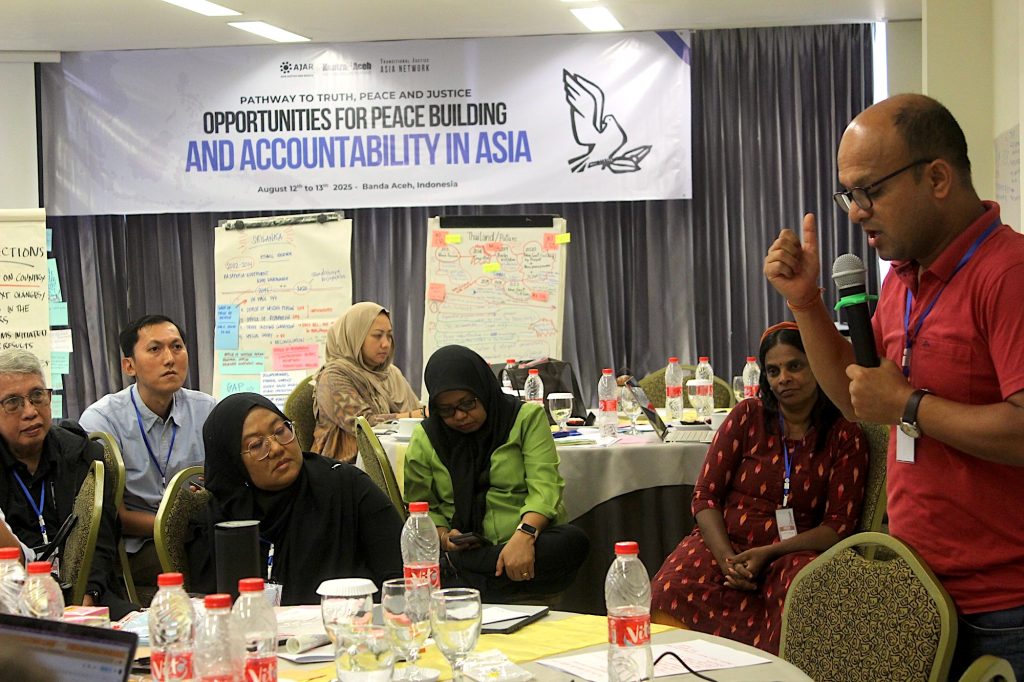
They participated in a three-day Regional Roundtable Discussion, which focused on Pathways to Truth, Peace, and Justice. The discussion created a platform for deep reflection, examining how Aceh’s experience might inform broader regional approaches to peacebuilding and transitional justice, while underscoring the vital role of civil society in supporting these processes.
The roundtable commenced with a two-session seminar titled Learning on the Peace Process and Accountability of Aceh, which revisited key milestones in Aceh’s post-conflict trajectory. The initial session, “Looking Back: A Peace Process in Aceh,” moderated by AJAR Regional Program Officer, Amalia Suri, explored the Aceh peace process within Indonesia’s accountability efforts. Speakers, including Juanda Djamal (Aceh Civil Society Task Force), Shadia Marhaban (Southeast Asian Women Mediators), and Faisal Hadi (Nurani Perdamaian Indonesia), offered perspective on the contributions of political leaders, women, and civil society organizations in forging and sustaining peace. The second session, “Memory and Promoting Accountability After the Peace Process,” moderated by AJAR Indonesia Country Manager, Mulki Makmun, focused on long-term strategies for peace preservation through truth-telling, memorialization, intergenerational engagement, and cultural expression. Speakers, Afridal Darmi (Chair of Aceh TRC, 2016–2021), Azharul Husna (KontraS Aceh), and Raihan Lubis (Journalist and Sophie Sunset Library), discussed the importance of transitional justice mechanisms, the role of victims in safeguarding memory, and the function of narratives and arts in collective memory preservation and healing.
The three-day event concluded with a moving statement of solidarity–a shared commitment to peace and justice across Bangsamoro, Myanmar (including the Rohingya), Nepal, Patani, Palestine, Sri Lanka, West Papua, and beyond, recognising that struggles for justice are interconnected and hopes for peace are shared.
Sharing Aceh’s Voice with the World
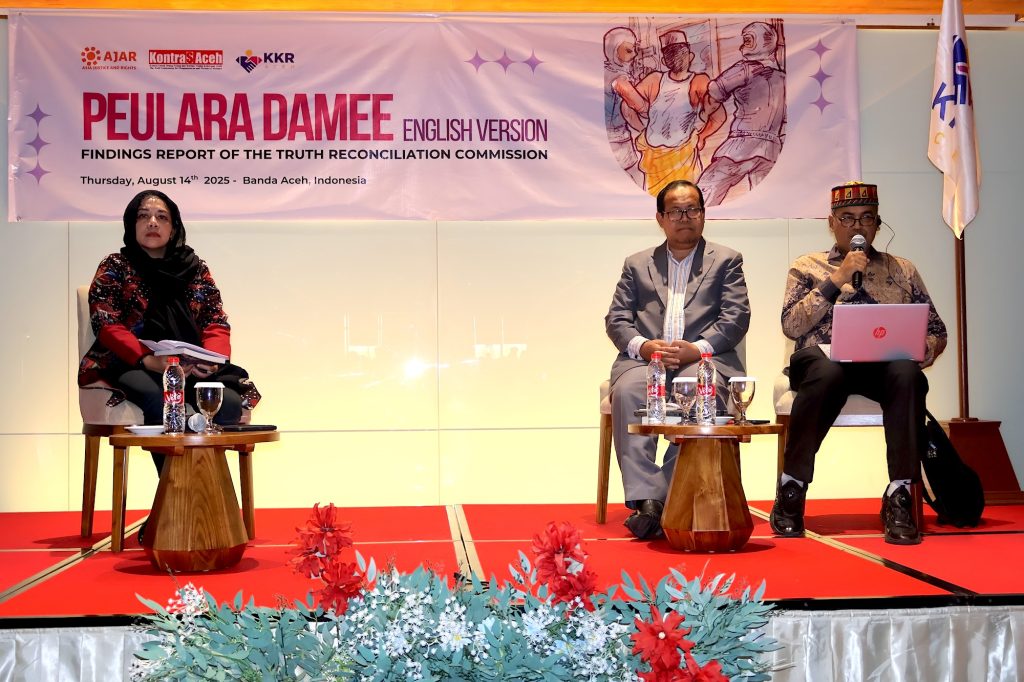
A key highlight of the week was the launch of the English version of the Aceh TRC’s report, Peulara Damèe (Nurturing Peace), on August 14. This hybrid event brought together the Aceh TRC Commissioners, representatives from government, civil society organisations, and international guests, including diplomatic communities. The UN Special Rapporteur on Truth, Justice, and Reparation and the UN Special Advisor on the Responsibility to Protect, alongside former TRC commissioners from Thailand, Sri Lanka, the Philippines, and Timor-Leste, participated. Their reflections underscored Aceh’s significance as a rare, domestically generated example of transitional justice in Asia, and its relevance to ongoing global discourse on peace and accountability.
The international engagement continued during the 10th International Conference on Aceh and Indian Ocean Studies (ICAIOS), Post-Conflict Development in Asia: Reflections, Resilience, and Future Pathways. Transitional justice expert Patrick Burgess presented practical lessons the Aceh peace process offers for Myanmar, given the current conflict and fragile transition in that country.
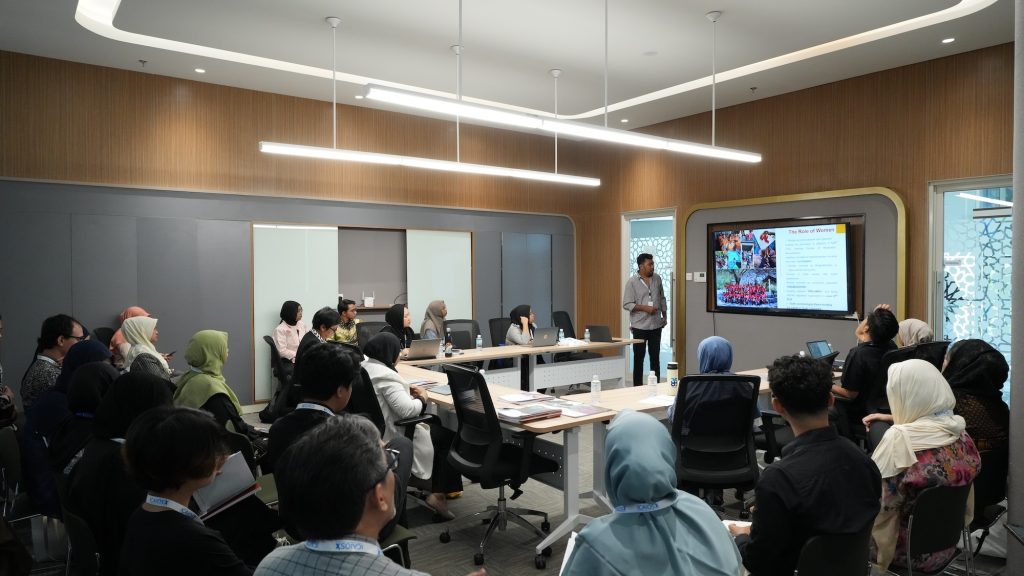
During the conference, AJAR and TJAN co-hosted a Special Panel on Women, Peace, and Security in Asia, moderated by AJAR Deputy Manager for Regional Program, Putri Kanesia. The panel featured experts of transitional justice, Sanda Thant (Thailand), Anchana Heemmina (South Thailand), Azharul Husna (Indonesia), and Nizio Carvalho (Timor-Leste), who shared powerful stories concerning women’s and youth roles in peacebuilding and accountability, alongside innovative approaches for addressing gender-based violence in post-conflict contexts.
Reflecting on Memory, Justice, and the Future
To deepen understanding of these interconnected contexts, AJAR Deputy Manager for Myanmar, Alarie, and AJAR Senior Program Officer of Timor-Leste, Inocencio de Jesus Xavier, offered insights in the podcast Human Rights & Bloody Struggle: What Can Indonesia Learn from Timor-Leste and Myanmar? Their discussion reflected on ongoing movements, challenges, and lessons relevant across the region. Indonesia, Timor-Leste, and Myanmar share common experiences in confronting conflict, shaping both their national trajectories and the broader political dynamics of the region.
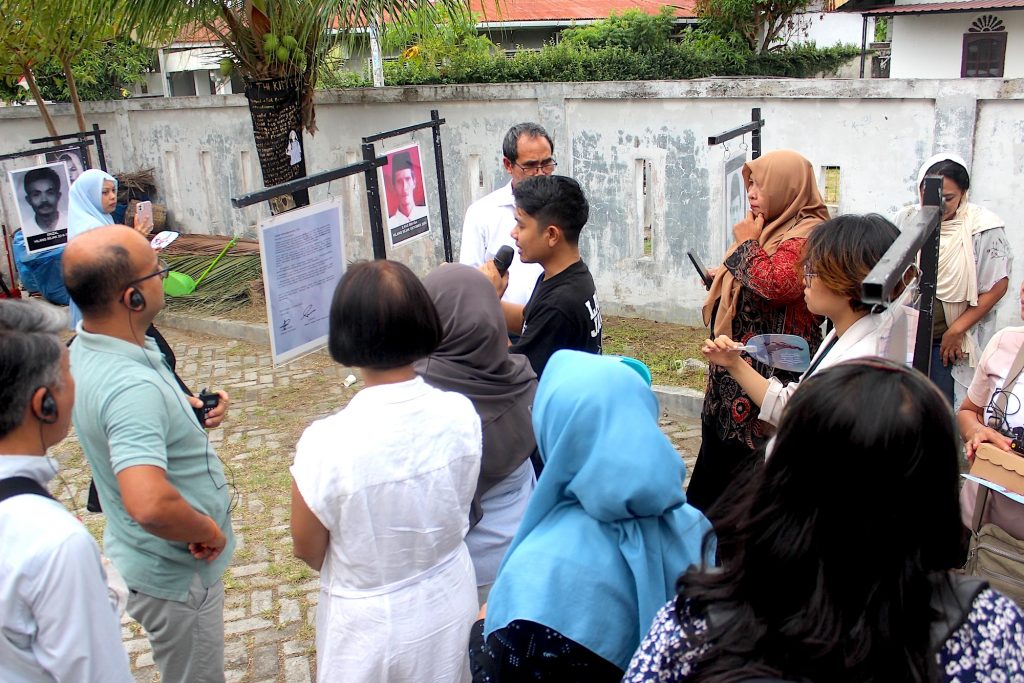
Throughout the week, TJAN members engaged in various events hosted by the Aceh Government and CSOs, including the official 20th Anniversary ceremony, CSO exhibitions, public dialogues, a human rights tour to memorial sites, and a two-day survivor gathering organized by AJAR Indonesia Program and KontraS Aceh. This participation provided TJAN members insights into ongoing innovations for peace, memory preservation, and accountability in Aceh, especially the perspective of survivors and youth.
The commemoration served to reinforce the commitment to fulfilling victims’ rights, ensuring accountability, and sustaining peace for future generations.