Gwangju, South Korea, 18 May 2025 – AJAR Indonesia Program Deputy Manager, Emmanuella Kania Mamonto, joined as a panelist in the thematic session “Learning from the Past, Moving Forward,” at the Gwangju Democracy Forum (GDF) in South Korea, which commenced from 14 to 18 May 2025. The session, proudly co-organized by GDF and AJAR, was held on 16 May 2025. It presented two speakers from South Korea, Hyeong-Ju Kim (Professor, The May 18 Institute, Chonnam National University) and Kyung-Seop Park (Non-Resident Researcher, The May 18 Foundation). The session also presented two other panelists, Pornpen Khongkachonkiet (Director of Cross-Cultural Foundation, Thailand) and Corazon Valdez Fabros (Co-President of International Peace Bureau, Philippines). The session aimed to reflect a transitional justice approach through new perspectives.
The speakers shared their experiences and perspectives on the connection between the Gwangju uprising and the present democratic challenges in South Korea. Kyung-Seop Park discussed a reflection on truth-seeking efforts related to the May 1980 Uprising. He explored the lessons through the lens of Han Kang’s novel Human Acts, asking the profound questions, Can the past help the present? Can the dead save the living? The Gwangju uprising, he emphasized, is both a painful memory and a guiding light—a foundation for South Korea’s democratic identity and a call to action for each generation to honor and carry forward.
Three panelists, including Pornpen Khongkachonkiet, who is also an expert member of the Transitional Justice Asia Network (TJAN), shared their experiences and insights. They, who lived through martial law or authoritarian regimes similar to the Gwangju Uprising, reflected on the states of emergency in their respective countries, the responses of civil society, and how these movements have shaped each nation’s pursuit of justice and democracy.
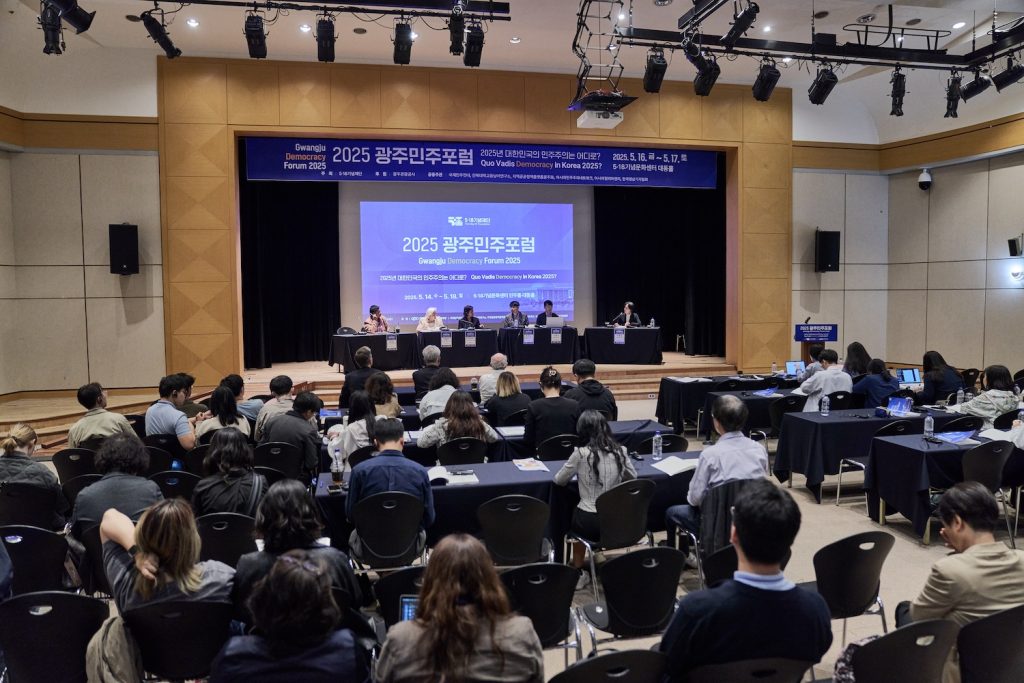
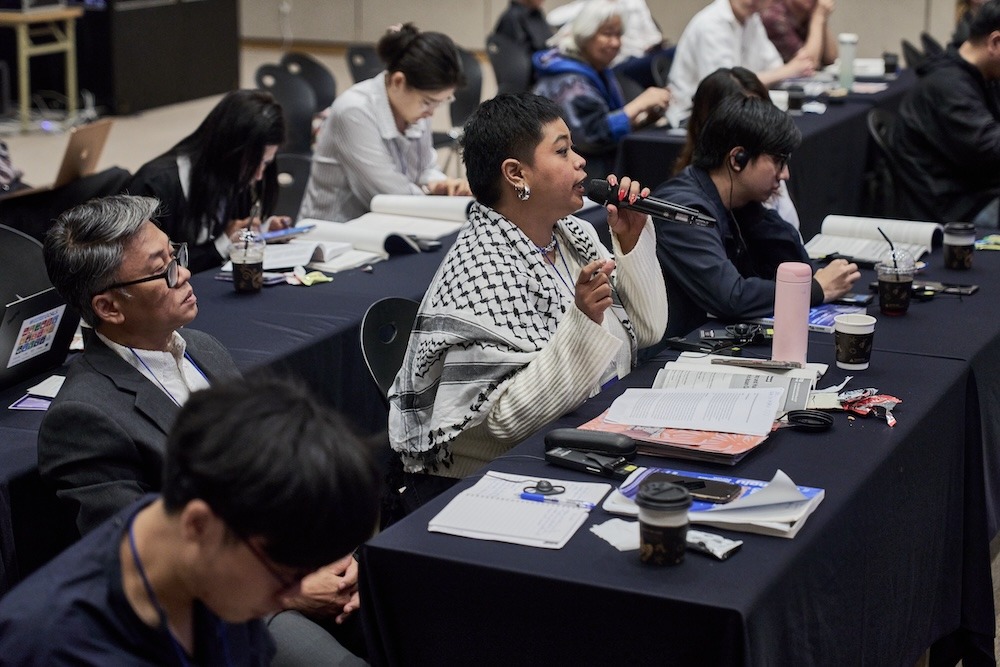
Kania Mamonto highlighted Indonesia’s ongoing challenges with military influence, entrenched impunity, and fragile democratic institutions, despite the fall of the New Order regime under Suharto in 1998. The last decade of Indonesia’s political developments, particularly under Prabowo Subianto’s presidency, indicates a democratic backslide and resurgence of militarism. Kania emphasized that Indonesia’s democracy is at risk of returning to authoritarianism, marked by growing military control and shrinking civic space. To counter the trend, she underscored the necessity of sustained civil resistance, critical education, and historical reckoning—key lessons Indonesia can learn from South Korea’s democratic resilience.
The May 18 Democratic Uprising of 1980 serves as a central theme of the forum. The event brought together human rights activists, youth, academics, journalists, victims, and families of victims of human rights violations to discuss transitional justice in the context of democratic regression, ongoing human rights violations, the climate crisis, poverty, and inequality. In addition to sharing experiences from across the region, participants focused on the importance of civil society movements and the need to strengthen regional solidarity.
Complete information on the 2025 Gwangju Democracy Forum program can be downloaded here