Nasira

Nasira

Nasira was heavily pregnant when she was forced to escape to Bangladesh with her husband and two children. It was an arduous journey. Seven days after reaching Bangladesh, Nasira gave birth to their third child. Nasira pictures her life split in two, separated by a river.

“On this side of the river I am here, living in the camp, and on the other side is my old house and my cattle back in Myanmar. I like playing with my children, I like cooking and writing. But what I really want is to go home, to the other side of the river.”
Nesrine

Nesrine

Nesrine lives in the camp with her mother and her daughter. She runs a shop. The Myanmar military killed her husband and her two sons. Nesrine is a survivor of rape. She was abducted and raped by four soldiers. She still has the scar when they cut her with a knife. She has a child by one of the soldiers who raped her.

“I cry rivers of tears, I won’t be able to stop crying until I get my dignity, until I get justice for my husband and my children.” Nesrine still loves her country.

Nawal

Nawal

Nawal is passionate about education. She wants to read more and she wants to work, even though that’s unusual for Rohingya women. She wants to work in Bangladesh. She believes education and being self-sufficient will make you powerful.

“I am survivor of genocide. I fled to Bangladesh on 25th August 2017, and became a refugee. We demand justice and rights. We want a safe zone under UN protection. We want gender and race equality, we want freedom and liberty.”

Neziha

Neziha

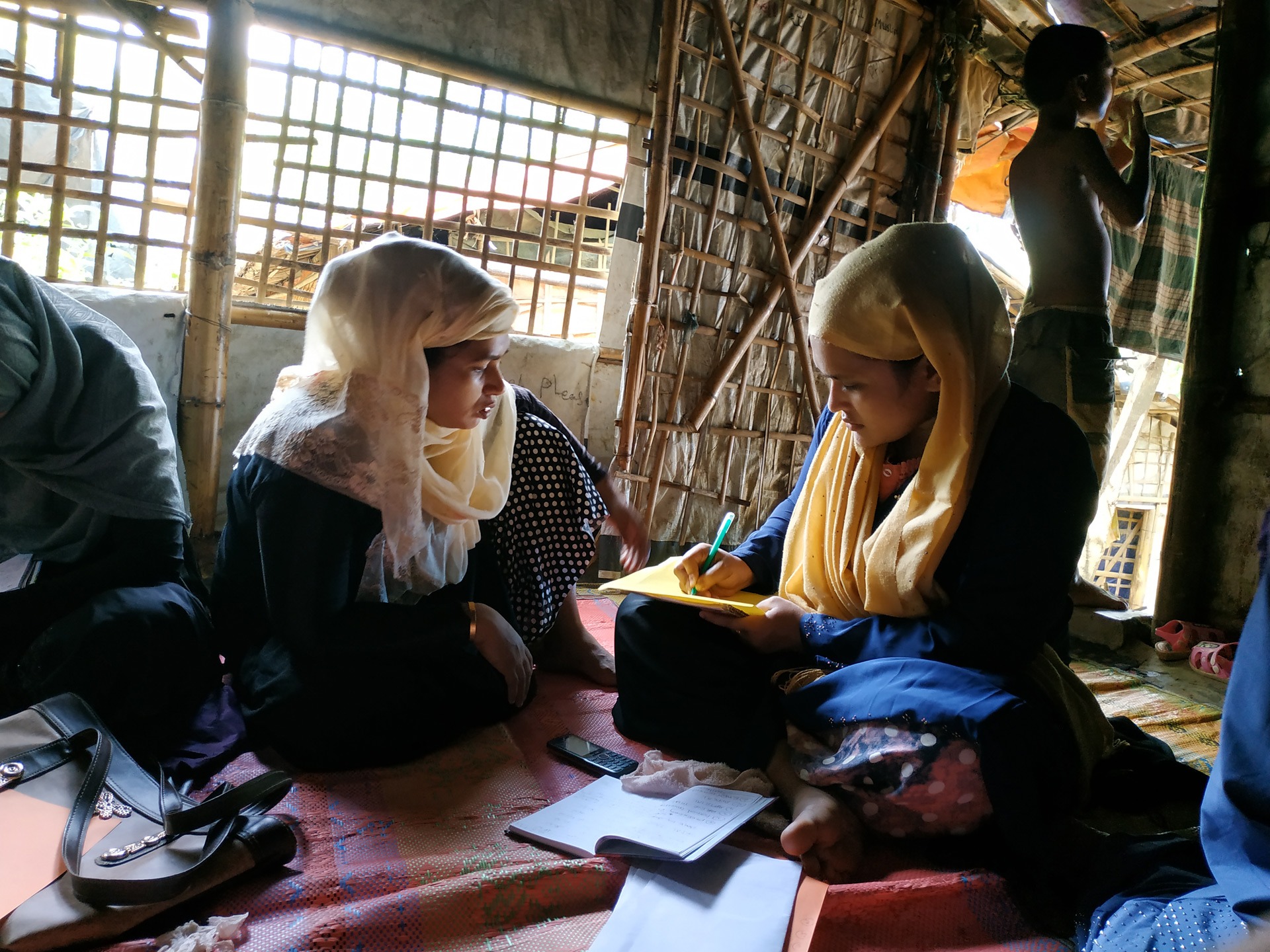
Neziha wants to learn new skills while she is in the camp.

“ I want to learn about computers and sewing for my future so that I can be independent. These are the sources of livelihood. Both my parents are dead, so I live with my sisters and their husbands in the camp. But I want to reduce the burden on my family by becoming more self-sufficient.”

Nihal

Nihal

“I live in a ‘register camp’ for Rohingya who were living in Bangladesh already, before the 2017 atrocities. Because of the conflict, my parents were unable to return to Myanmar, so I was born here in Bangladesh.

I live in the camp with my husband, our daughter and his parents. I dream of building a house where we can live peacefully, with a garden. I don’t like camp life because we have no garden.”

Nuzar

Nuzar

“I miss my home and I miss my younger sister. I have no idea where she is, or how she is doing. I don’t know whether she is still alive. I hope one day my sister will make it to Bangladesh and that we will be reunited.”

Rahima

Rahima

Rahima would like to be a doctor so she can serve people, especially those less fortunate than her. She knows she is better off in the camps than in Myanmar, but dreams of going back and living in her own home.

Rahima is resilient and wants everyone to know that even though the Rohingya suffered so many atrocities, they will never be weak again.

“We lost many things, we were raped many times, by the military. But NO more. We are strong, we can overcome. Everything will be fine, do not lose your spirit.”

Nuha

Nuha

Before her escape to Banglades, Nuha witnessed the Myanmar military bursting into her home, tying up her father and killing him. After they had killed him they set the house on fire and burnt it to the ground.

“Will my children ever enjoy their citizenship rights. Will I ever go back? Will they go back? Why do we have to live in another country? Why did the government force us into the exile? I want to return to Myanmar, to my village, with full citizenship rights restored. I demand justice.”

Nura

Nura

Nura is grateful to the people of Bangladesh who came forward to help her and her family. Nura is a teacher and she misses school. She wants to go back to her village in Myanmar.

“We will never forget out home,” she says, “We have human rights and want to go back.

Oma

Oma

Oma fled to Bangladesh with her family in 2017, but has since escaped to Malaysia to join her husband. She married her husband over the phone while she was in the camp. Her friends in the camp in Bangladesh are not sure how she made it to Malaysia, particularly during the Covid-19 pandemic.

They are concerned as it shows that people smugglers are active in the camps, and that young women are particularly vulnerable.

Qameer

Qameer

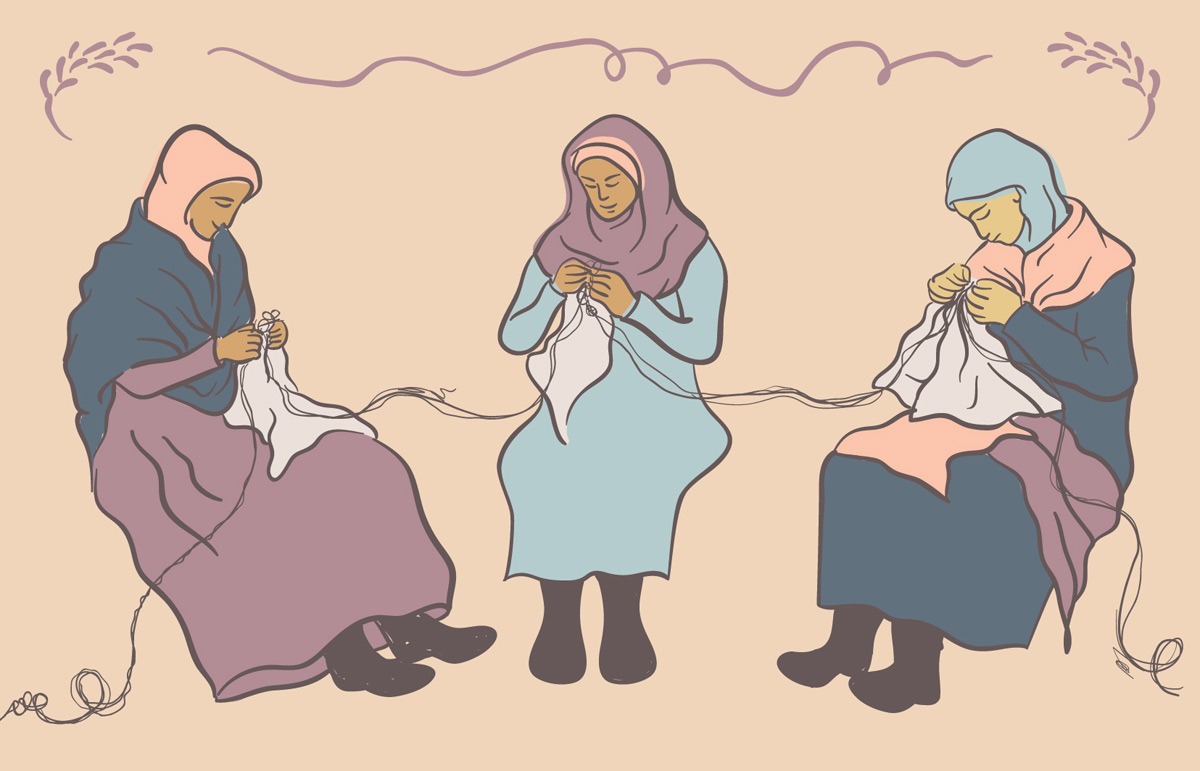
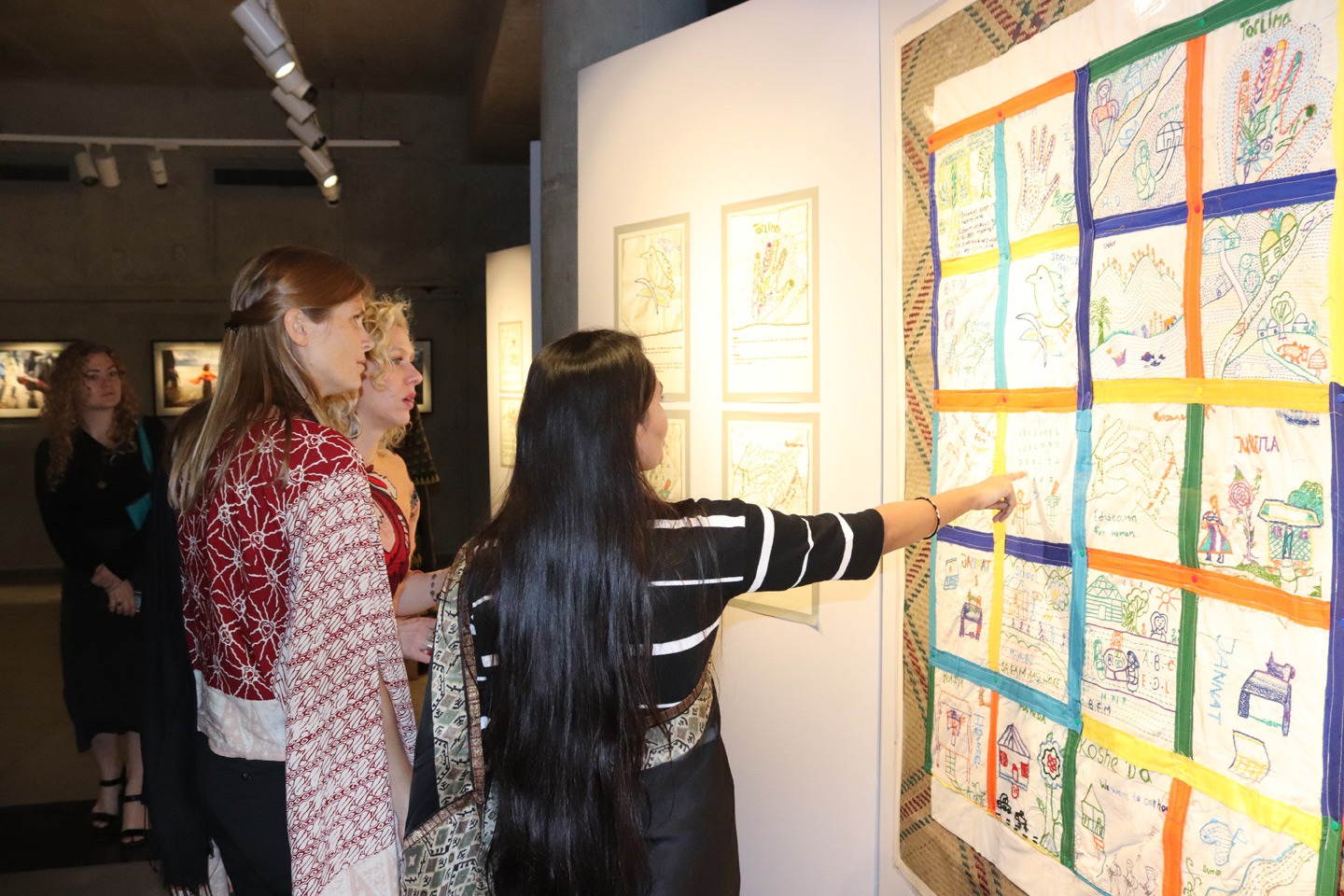
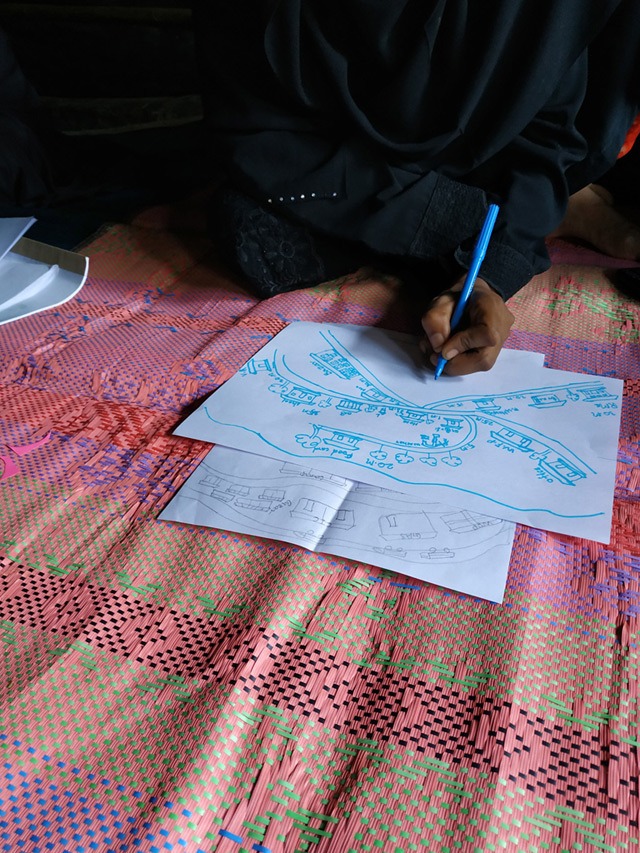
Qameer embroidered a scene from her village that depicts her house next to the main road, by the paddy fields and a river “Embroidery reminds me of the good times, as well as the horror of the atrocities perpetrated by the Myanmar military, and that my village, including my home, was burnt to the ground.”

Rabeea

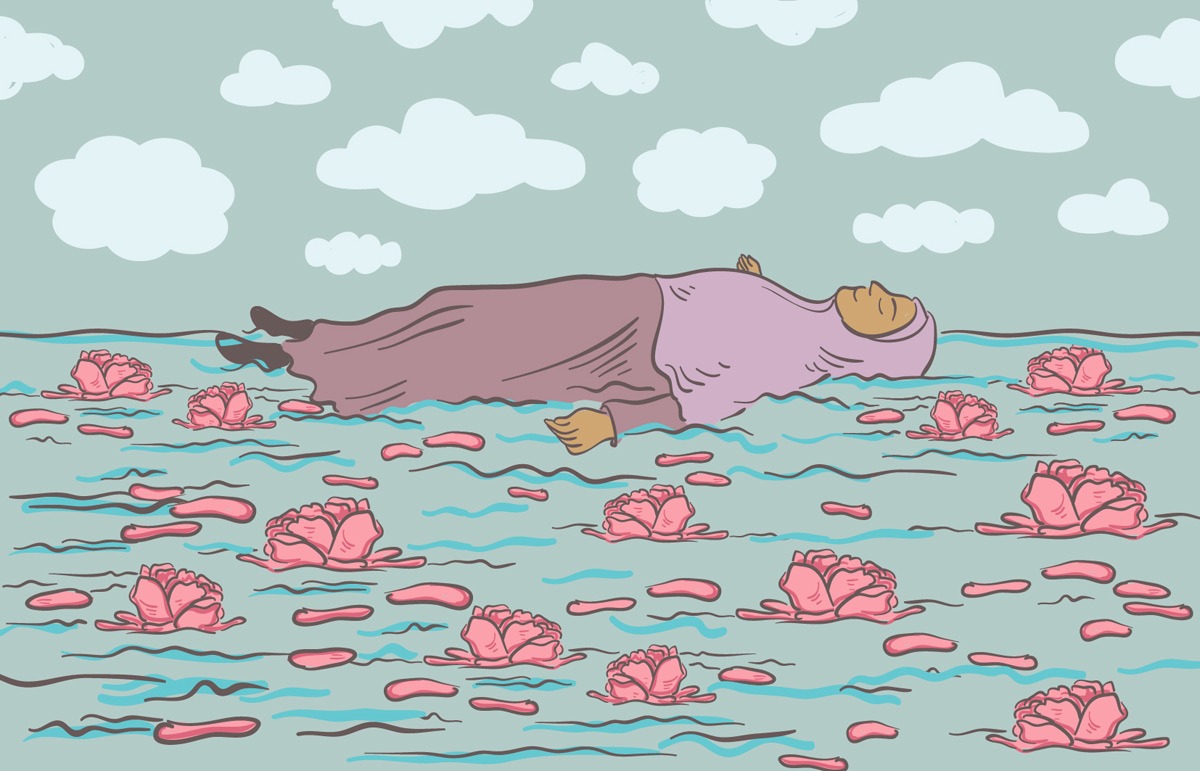
“I feel like I am floating in a pond, a pond surrounded by flowers. I had to leave my country and live this camp life.

The pond surrounded by flowers is a symbol of my hope to live a happy life again in my country” I took part in several AJAR activities. I learnt about human rights. I want to get back my rights.

Rabeea
Sabeeha

Sabeeha

“I had to leave everything in Myanmar. The generals, the extremist monks are responsible for our fate. Our grandparents couldn’t solve this problem we face, and now the suffering is even worse.

I hope that the international community can give us our land back. I hope General Min Aung Hlaing will face a judge in court.”

Sabah

Sabah

“I lived a happy life in Myanmar with my family. My husband had a motorcycle so we could visit my family. Now I have lost my happy family.”

Sabah wants to hold General Min Aung Hlaing and the extremist monks responsible for the atrocities perpetrated against the Rohingya.

Sabooha

Sabooha

“We are Arkan Rohingya Muslim. Please stop, no more genocide. We want our human rights, our citizenship rights. All we can do is wait for the international community to help us find justice”

Tahiya

Tahiya

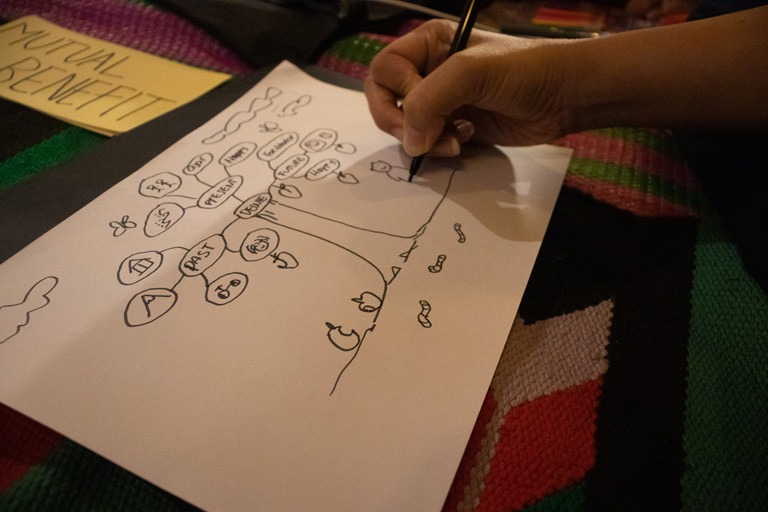
“If my life is a tree, then the leaf is my reality. I lost my house, all my belongings, my land, everything. Those who are responsible are the bark: the generals, the extremist Buddhist monks.

At the root, we are Rohingya, we are Muslim. Is this a crime? How sweet the fruit would be if the international community could give us justice”

Tirana

Tirana

“Everything was destroyed right in front of my eyes. The military burnt down my house, my shop, They attacked my people. They forced us to leave our country. We are Rohingya Muslim, please tell my Myanmar motherland to give back our human rights.”

Wafa

Wafa

“The Myanmar generals are responsible, this is why I am here. The extremist monks too. I hope one day we will see justice done for the crimes that were committed against us.”

Yusra

Yusra

“The memory of my house in Myanmar gives me hope for a life I once had. Look, we used to grow flowers. We had many flowers. When I prayed I could see the flowers from my prayer room”.

Yusra draws a picture of her daughter to share with the group. Yusra writes a postcard to the world. I am in the hospital with my daughter. She is not well. She is only two years old.

Zahia

Zahia

“I love flowers. They make me very happy. Although I am in this camp, I can still do things, make things with my hands.

I cook, study, write, sew. I can eat, I can wear clothes, I can clean the yard and the house, mopping the floors, making clothes, looking after my younger brothers and sisters, taking care of my grandparents. At least I can keep busy.”