Malika
Malika’s husband was shot and wounded by the military which still causes him a great deal of pain. Because of the trauma he is now living with a mental health condition.
Malika’s husband was shot and wounded by the military which still causes him a great deal of pain. Because of the trauma he is now living with a mental health condition.

Maimana was 18 years old in 2017 when the military attacked her hometown. She witnessed the military burn down the houses.
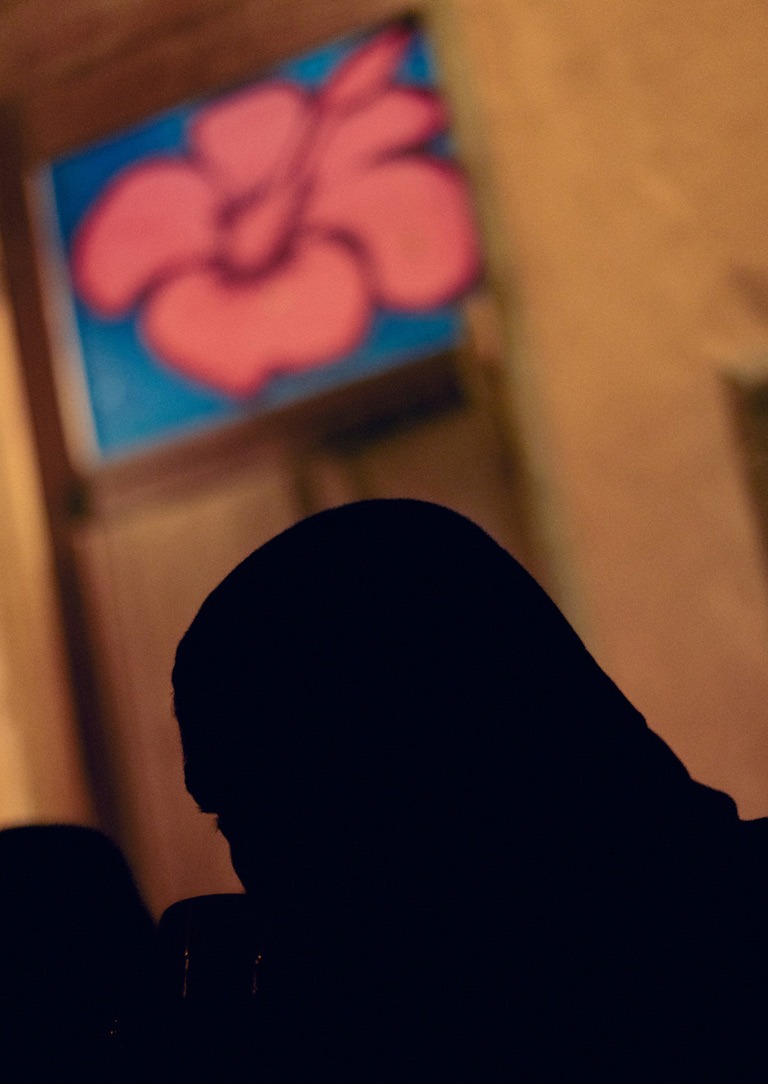
Together with her family they escaped, first to Murapara where they waited until it was safe to continue their journey across the border to Bangladesh. Flowers make Maimana happy. When she sees flowers she feels safe and comfortable again. “Whenever I see flowers, I feel good.”
The Myanmar military shot and killed Marwa’s father right in front of her. She is deeply traumatized by her father’s killing and suffers some paralysis because of the shock.
For a number of years Marwa was separated from her son following the aftermath of the atrocities and the escape to Bangladesh, but they have now been reunited.
She is grateful to the people and government of Bangladesh for providing them with shelter, but most of all she desires justice. “We are Arkan Rohingya Muslim, please give us our human rights. We want to return to our homeland.”
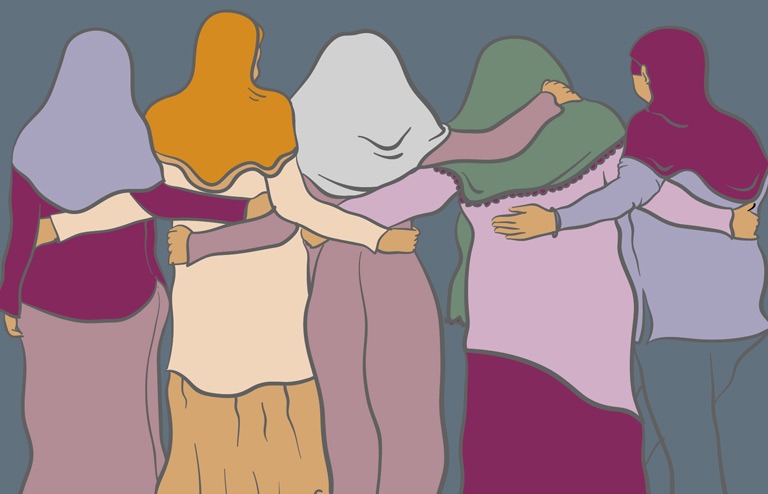
“My memories of Myanmar break my heart. When I came to Bangladesh, my heart was full of sadness. But by joining the workshops, I had the chance to express my feelings and learn many new things. Now I engage with my community.
So, within the dark and broken heart, I was able to find a ray of light and sweet happiness. So, I symbolize myself as a broken heart with sweet fruit.”
Marya’s father was a farmer. They lived in a wooden house with a beautiful garden in the yard. Because of travel restrictions, Marya and her family never visited the nearby town. She was married at 17 and has two sons.
Marya says it was a happy marriage, but the happiness didn’t last long and is now divorced. Marya blames the events of 25th August 2017, which struck terror into their lives leaving a lasting scar on their relationship.
Marya and her family lived in a wooden house with a beautiful garden. Because of travel restrictions, they never visited the nearby town. She married at 17 and has two sons.
It was a happy marriage, but the happiness didn’t last long and she is now divorced. Marya blames the events of 25th August 2017, which struck terror into their lives, leaving a lasting scar on their relationship. But the camp activities have helped Marya grow strong again.
“As a result of participating in AJAR’s workshops, I am now self-reliant even after separation from my husband.”
“My memories of Myanmar break my heart. When I came to Bangladesh, my heart was full of sadness. I was forced to leave my own country, the houses were burnt to the ground, all our belongings destroyed.
If someone loses their house, they can always rebuild it. But it is a matter of fact, that when someone loses their country they lose everything.”
Back in Myanmar Maryam\’s husband was a high school teacher and they lived a good life. They had a two-story wooden house with a tin roof and were quite well-off. Before they escaped to Bangladesh, Maryam saw the military kill one of her brothers and burn down their home.
She was forced to leave her parents behind. Now Maryam has two children, one of whom was born in the camp. She worries that they will never be able to return home to their own country and hopes the international community can help.
Maya is a teacher. She remembers the military attacks on her village in 2012 and 2017.
“The atmosphere in the village was tense and very frightening. The military burnt my house down.
Everywhere people were running, screaming and crying. We were terrified. I saw many dead bodies floating in the river during my escape to Bangladesh.”
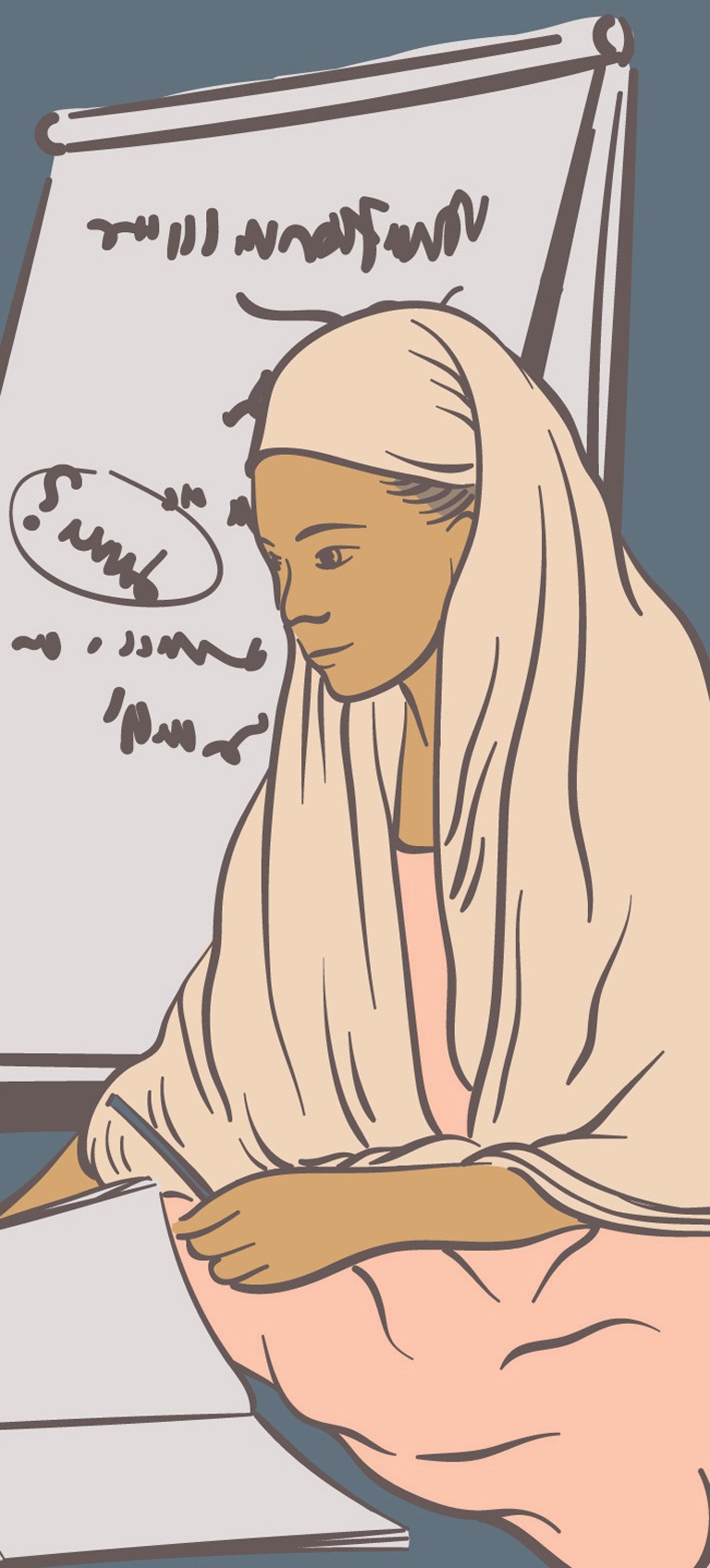
Now she teaches in the camp. She hopes that she can help to secure the future of the Rohingya children.
“Education is the backbone of a nation. I am a part of the backbone as a school teacher.”
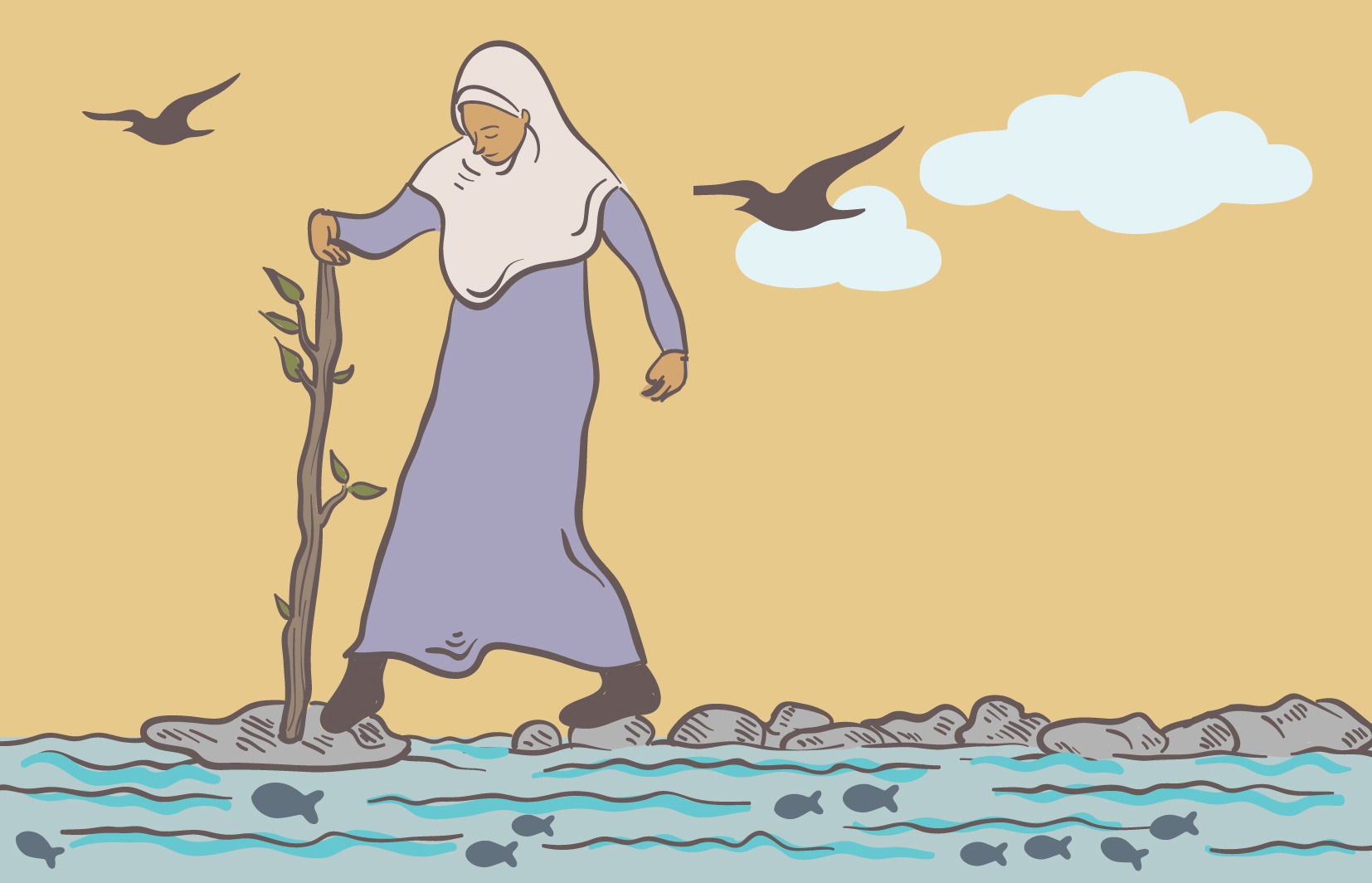
“The Myanmar military killed my husband. I had to escape to Bangladesh with our five children. It took us 16 days to reach the border and find safety.
I am very angry with the Myanmar military. I want to go home, I want to go back to my country.”
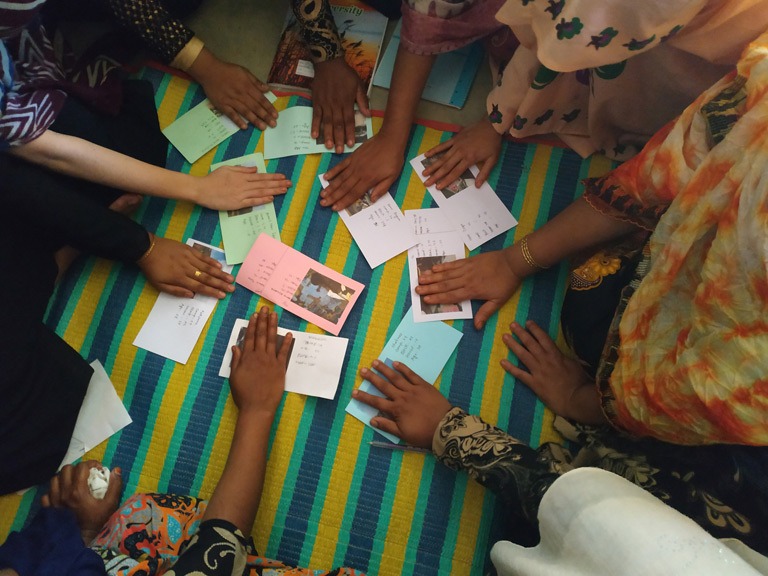
“The Myanmar military burned down our house to the ground when they attacked my village. We tried to run away and escape to Bangladesh to find safety. But my husband was shot dead by the military as we tried to cross the Mongdu River. He died instantly.
It took me over two weeks to reach Bangladesh. Now I still feel like I am floating in the river, just trying to survive. I can’t even think about the future”
“The military killed my sister. I have lost everything. I can’t stand to think about all that I have lost. I want to return to my country.”
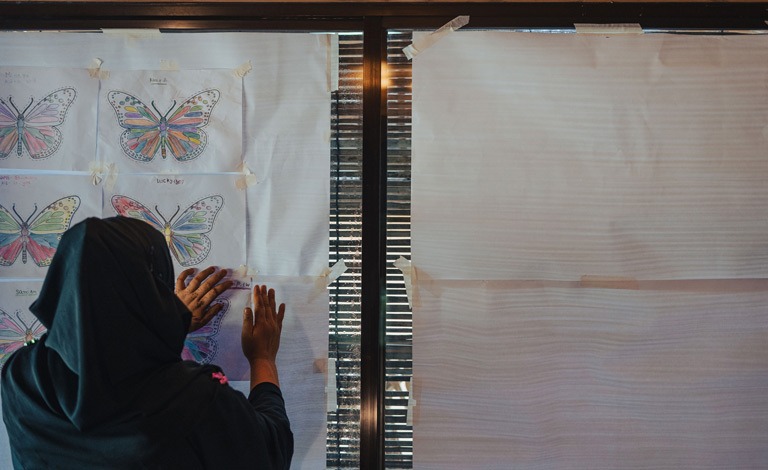
Nabila is a survivor of rape. She was abducted by the Myanmar military and held captive for three days. For three days, Nabila was raped and assaulted. She managed to escape and made her way to Bangladesh, leaving everything behind.
Nabila believes that the international community has a responsibility to protect the Rohingya, especially the women. She wants justice for the crimes perpetrated against the Rohingya. She says the Myanmar government must be punished for its crimes.
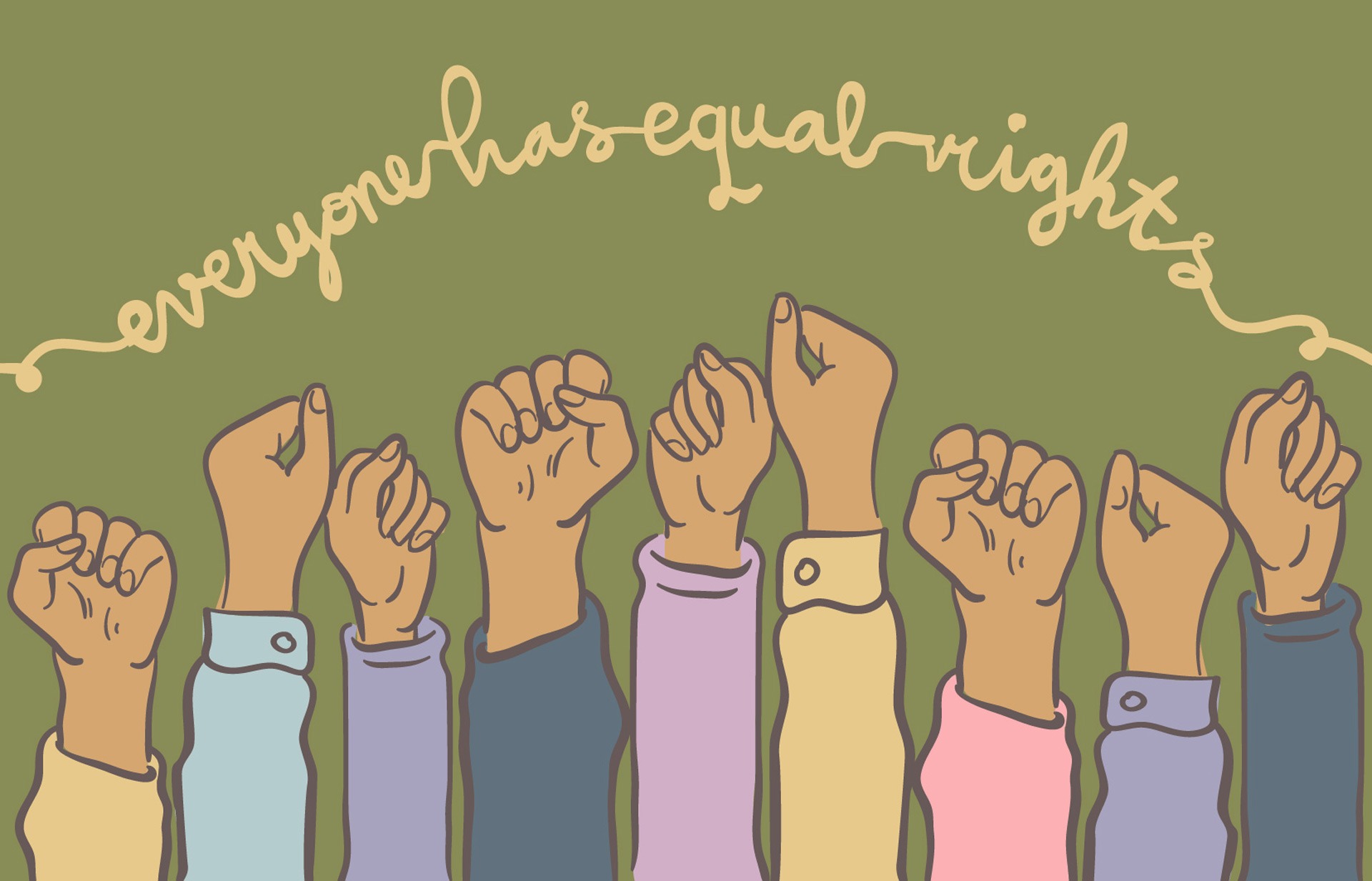
“We want our rights back. The international community shouldn’t listen to the Generals of Myanmar. If the international community came forward to support the Rohingya, we would stand a chance of getting justice.”
“I want my citizenship rights back. I have lost everything. My shop, all my belongings, my livelihood. I miss everything about what I have lost.
I was eight months’ pregnant when I was forced to leave my home and escape to Bangladesh. I want to go home”.
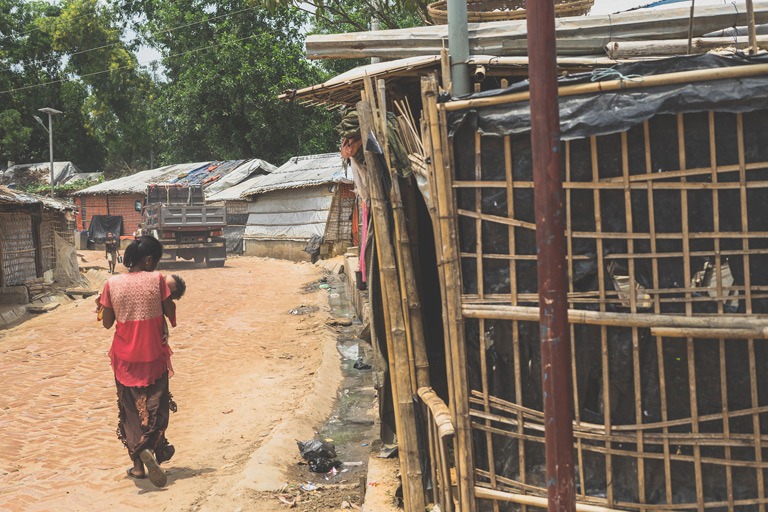
“My mother and I saw the Myanmar military shoot my brother dead. They shot him and then they threw his body into the burning house, the house they had set on fire.
My mother is still very traumatised. I will give blood to return to my country. I demand justice. I want the international community to do something.”

Nafasat is a survivor of rape. The Myanmar military tortured and raped her. She was pregnant when she escaped to Bangladesh, but she lost the baby. She is deeply traumatized. Now it is her husband who tortures her, she says, because she is unable to work.
Nafasat has little faith in the international community. She is desperate to go home and believes they have to find their own way back rather than sit and wait for the international community to do something. Nafasat is inspired by the way the people of Bangladesh fought for their country.

Najwa is 17 years old. She had a happy childhood, swimming in the river, trying to catch fish. She loved going to school but was forced to stop because of the conflict. At 13 years of age she witnessed the Rakhine extremists attack her village.
She escaped with her family by boat. It took them five days to reach Bangladesh. They had no food, only water. Najwa remains positive.
“We are united. We live together. We demand our rights. Unity is our strength. This is my hope,” she says.
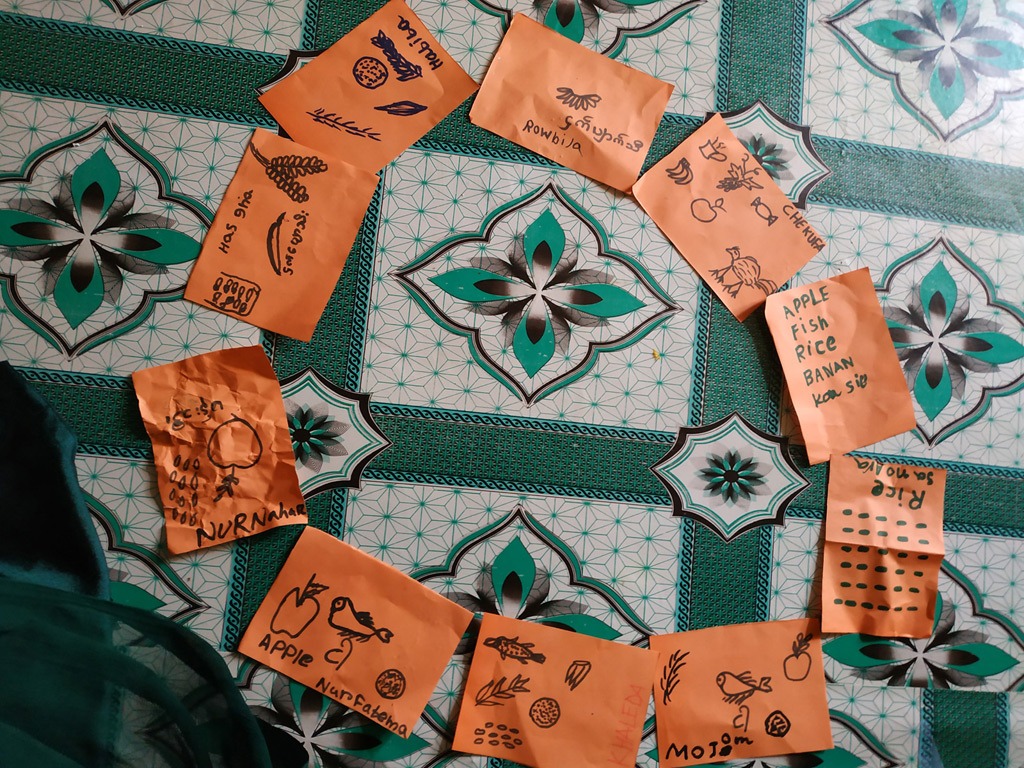
Nahlas hobby is cooking. She loves bananas and remembers the food her family grew back in Myanmar. They they kept chicken and cattle and grew spinach, potatoes, tomatoes, garlic and pumpkins.
They would also go fishing for shrimp. Nahla remembers the military arresting people in her village, taking them to the schoolhouse near her house and then torturing them.
Nahla was separated from her parents during the escape, but reached Bangladesh with her boyfriend. Now they are married and have a small child.
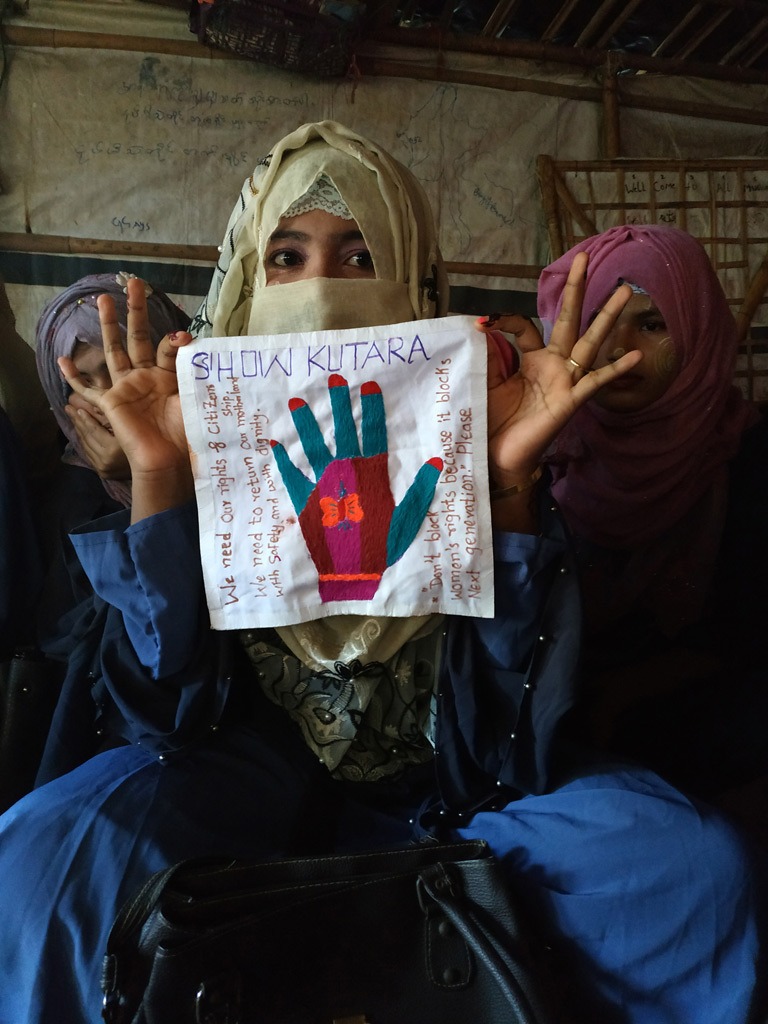
In 2012 Nameera had to drop out of school because of the conflict. The atmosphere was very tense and over the following five years Nameera and her family lived in a state of constant fear. Eventually, they were forced to escape to Bangladesh.
“I miss my house very much. I miss watching the birds perching on the trees in front of my house. We used to grow okra, aubergines, peas, beans, potatoes and pumpkins. We had such a healthy and nutritious diet.”
During one of AJAR’s workshops, Nameera embroidered a picture of her house, to remind her of happier days.
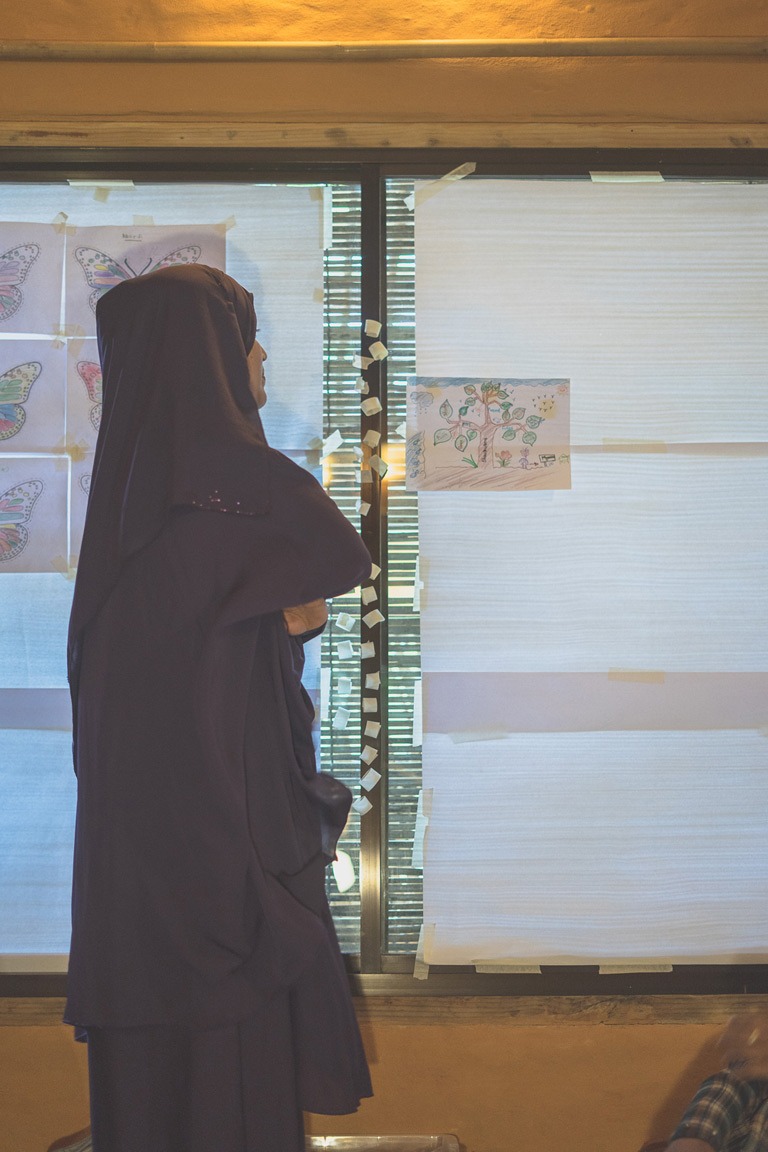
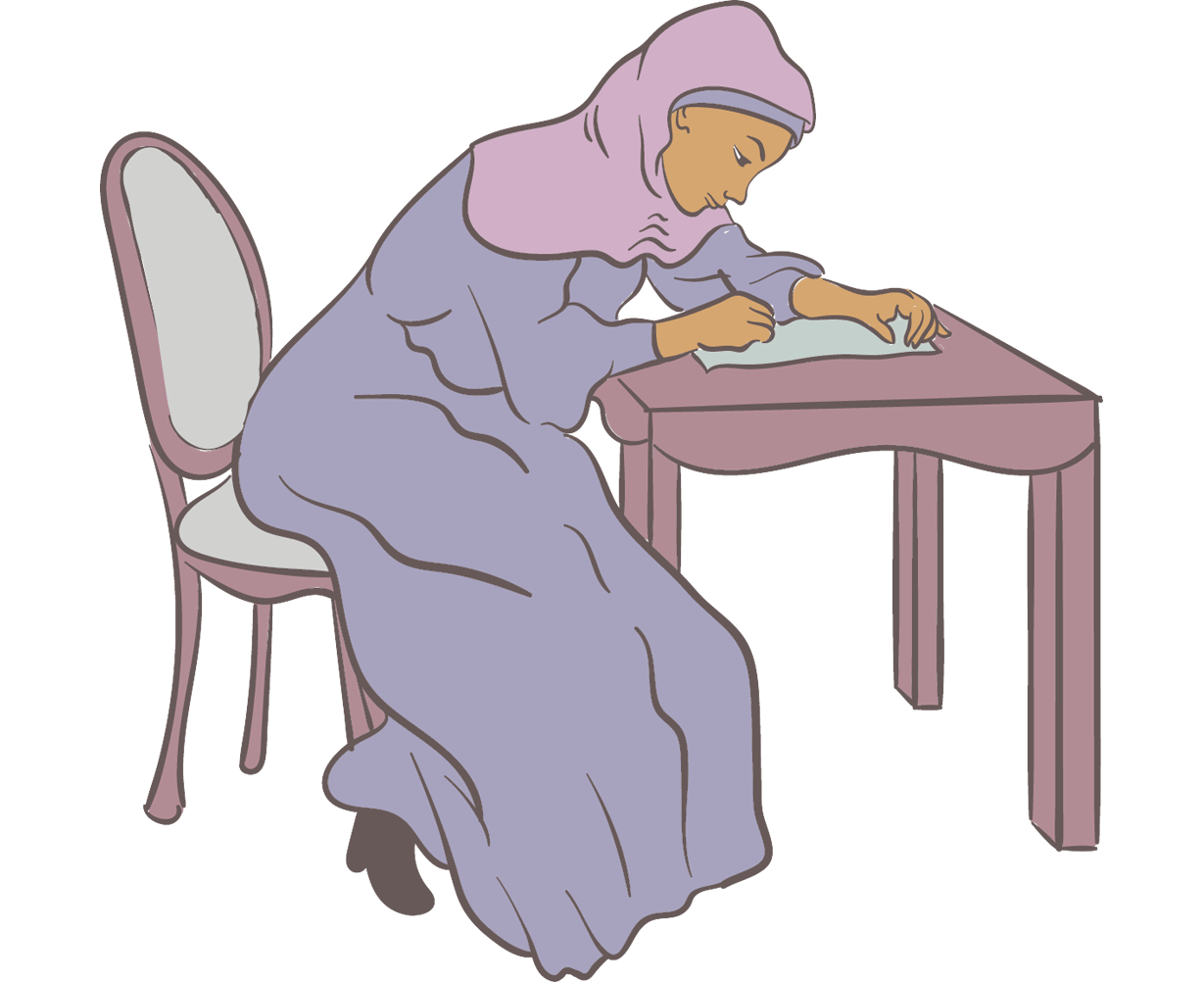
“I can’t read or write, not even my name. During the AJAR activities I learnt to draw instead to express my feelings. I had never drawn before, it felt really good.
I am sad that I can’t read and write. It makes me feel small, but I hope one day I will learn. In one of the workshops, I embroidered a picture of a desk and books. Sitting at the desk is a student. The embroidery represents my hope that my son will be able to study in the Rohingya’s own school one day.”
“I can’t read or write, not even my name. During the AJAR activities I learnt to draw instead to express my feelings. I had never drawn before, it felt really good.
In one of the workshops, I embroidered a picture of a desk and books. Sitting at the desk is a student. The embroidery represents my hope that my son will be able to study in the Rohingya’s own school one day.”
Naima’s husband is severely traumatised following the attacks on their village. He now lives with severe mental illness.
“The military came to our village and fired indiscriminately at the villagers and our homes. We ran away in terror, some seeking refuge in the forest, some running towards the mountains whilst others tried to escape by the river.”
Naima can’t read or write, so she drew a picture instead to convey her emotions. The picture is of a knife, a gun, and the military.
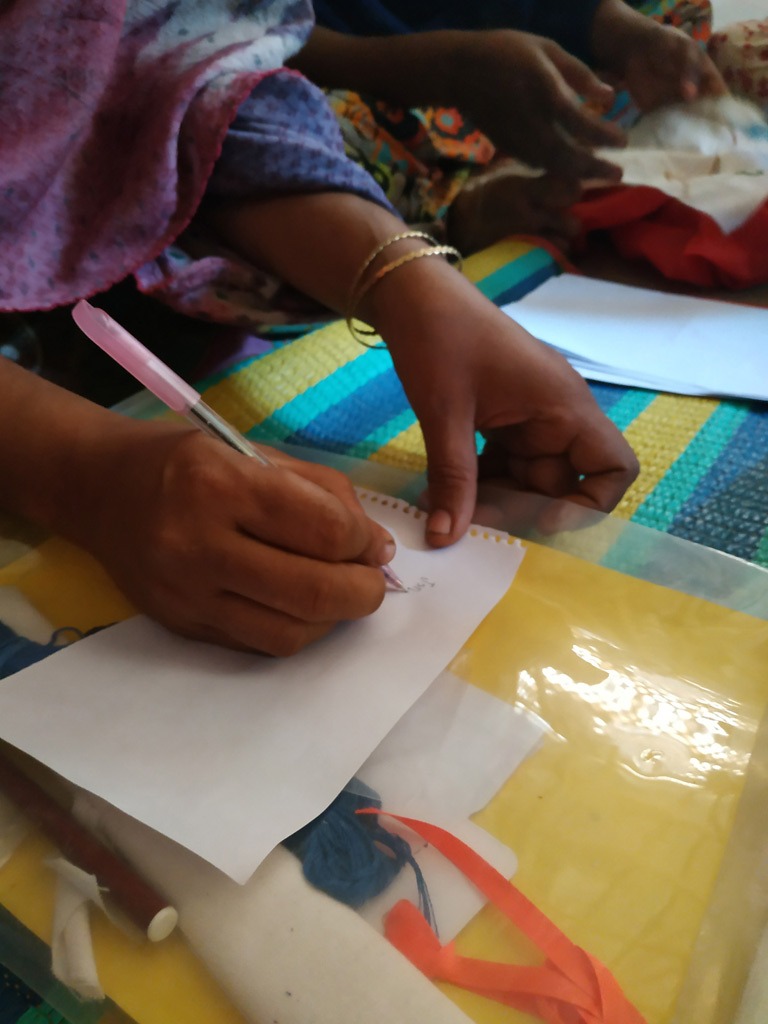
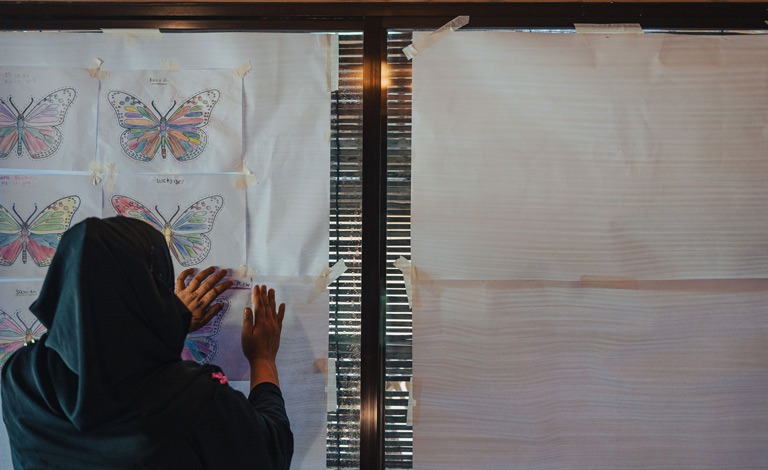
“There are two different Najats. The one that lived a life in Myanmar that was full of happiness and bright colours. The other is the one who lives in the camp, with no colour in her life.”
Najat worries about her childhood friends, wondering where they are, how they are and whether she will ever see them again.
“I miss the time we went to school together and what we talked about at school. I am very sad that I can’t see you. I worry about you a lot. When will I see you again?”