Amina

Amina

Amina was orphaned at a young age and unable to go to school. One by one her friends got married, but she remained single as she had no dowry. Life was tough for Amina, but it was so much better them before the military operations began in 2012.

Amina was too afraid to sleep. She heard the stories, she knew what was happening as women in her village began to disappear. The military attacked her village in August 2017 and their homes razed to the ground. It was then that she set off for Bangladesh.
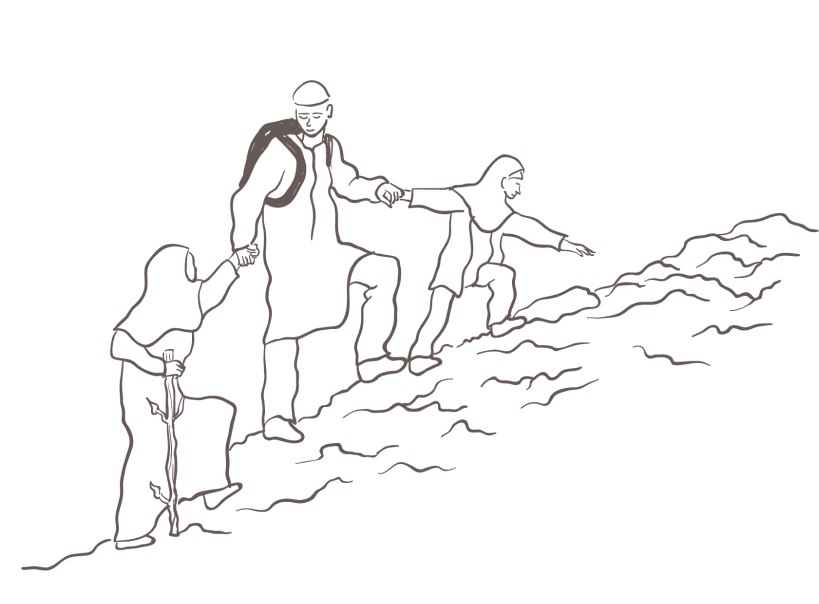
During the journey to Bangladesh Amina collapsed and lost the use of her legs. She gave the only possessions she had left – a pair of gold earrings, to a man who carried her to the border.

Amina is still single, and feels shame from the stigma of poverty, of not being married, of not having children. Following months of treatment, she is able to walk again and helps take care of her sister’s children. Amina’s only joy is the time she spends learning new things with other women

Amal

Amal

Amal is passionate about education. She was a teacher back in her village, and helps teach the children in the camps. Amal seeks out new learning opportunities in the camp, sharing what she has learnt with other women.

“I have learnt many things. It’s a great opportunity to engage with the survivors, our community. It feels like I am in school and learning new things like a child and I’m looking forward to learning more.”

Amal is an avid learner. Studying Human Rights and Justice in the camp has been a positive experience. According to Amal, human rights creates a friendly environment. She sees cooperation and responsibility as key values of human rights.

“working together is the most important activity, it makes it easier to promote human rights. But responsibility is also important, “it’s the key feature – we should prepare ourselves for the good and bad results of our actions,” she says, “If we are unable to be responsible, then we can’t uphold human rights”

Amal has a message of solidarity for all the people who have been caught up in war and conflict: As-salamu alaykum. Dear peoples who are affected by war, Are you all feeling Ok? I am sending my best wishes for your happiness.

As you know, we are also suffering from losing our belongings, families, relatives and had to flee from our native land, because of war. Although we are facing suffering, the world has not forgotten us. So, we have to nurture positive attitudes and face all the hardship. From, A woman who has the same life as you

Amani

Amani

Amani was left with nothing following the attack on her village and her escape to Bangladesh. She lost her home, her land, her clothes, books and all her belongings, but she misses her country.

Amani is a passionate advocate of citizenship rights. The Rohingya should enjoy the same citizenship rights as the other peoples of Myanmar. With citizenship rights restored, she argues, the Rohingya would enjoy freedom from torture, freedom to work and freedom of movement

Amira

Amira

Many of Amira’s relatives were abducted, tortured and killed by the military, including her uncle and two cousins that were taken as they were working the fields.

On the Friday before she escaped to Bangladesh, the Myanmar military burnt down houses in the neighbouring village. The people of that village took shelter in her village.

But a two or three days later the military came and attacked her village too. So they ran away to hide – but it was no good, their homes were also burnt to the ground. And so Amira had no choice but to flee to Bangladesh

Arwa

Arwa

It took Arwa and her family 15 days to reach Bangladesh. Although they have had to move several times since, Arwa is much happier now.

Arwa is grateful to her grandfather who was conscious about the importance of education and made sure she was sent to school. Arwa spends most of her days looking after her three teenage children and her husband, but still finds time to learn new skills. Since the pandemic she has found the distance learning videos really useful and is eager to continue her studies

Aya

“I feel good, happy when I think about the days we spend sewing, I don’t want to remember the bad days.”

The time Aya spends with other women in the camp, improving her sewing skills and learning about justice and human rights, is previous to Aya. It helps her forget about the past and focus on the future. Aya remains hopeful that one day she will be able to return to her homeland. “Having our citizenship rights restored would make me very happy, I hope the international community can support us.”

Aya
Aliyah

Aliyah

Aliyah has vivid memories of the brutality of the Myanmar military, the destruction of her village and the violence that lead up to that final attack. She recalls the abductions, the rapes, the murders.

She also recalls the discrimination that made it impossible for the Rohingya to study beyond junior school, to practise their religion and to find work outside of their villages.

“If I could obtain my national ID documentation, I would go back to my country immediately. But two years have passed and I don’t see any kind of hope to get justice. Maybe we will never see justice and rights”

Basma

Basma

“Without respecting each other we can’t achieve anything, and without responsibility, we can’t uphold human rights.”

Basma values the opportunity to learn about human rights and justice. She believes she has gained a lot of new knowledge and experiences that will be helpful in the future as well as the present. Her studies have inspired her to learn English and she wants to learn more about equality and discrimination.

“The workshops help me to reduce my worries. I can express my feelings, what’s going on in my mind, and I feel safe.”

Despite the government’s restrictions, Basma had a good life. Her father was a businessman and they lived in a wooden house with a beautiful garden with flowers, banana and mango trees.

They were a happy family. At 17, she married a school teacher. Basma looked after their children, while her husband taught in a neighbouring village.

Then, everything changed on what she refers to as Genocide Day: 25th August 2017.

“I grabbed hold of our important documents and fled the village with my children. I waited for my husband, but the military set up road blocks and he couldn’t come. After a few days we left for Bangladesh without him.”

Basma and her husband were reunited a few days later.

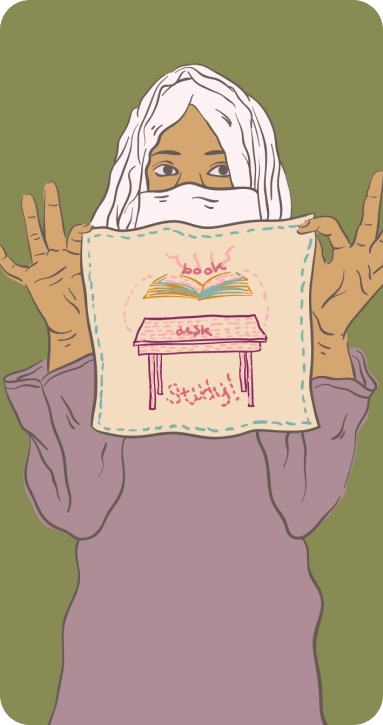
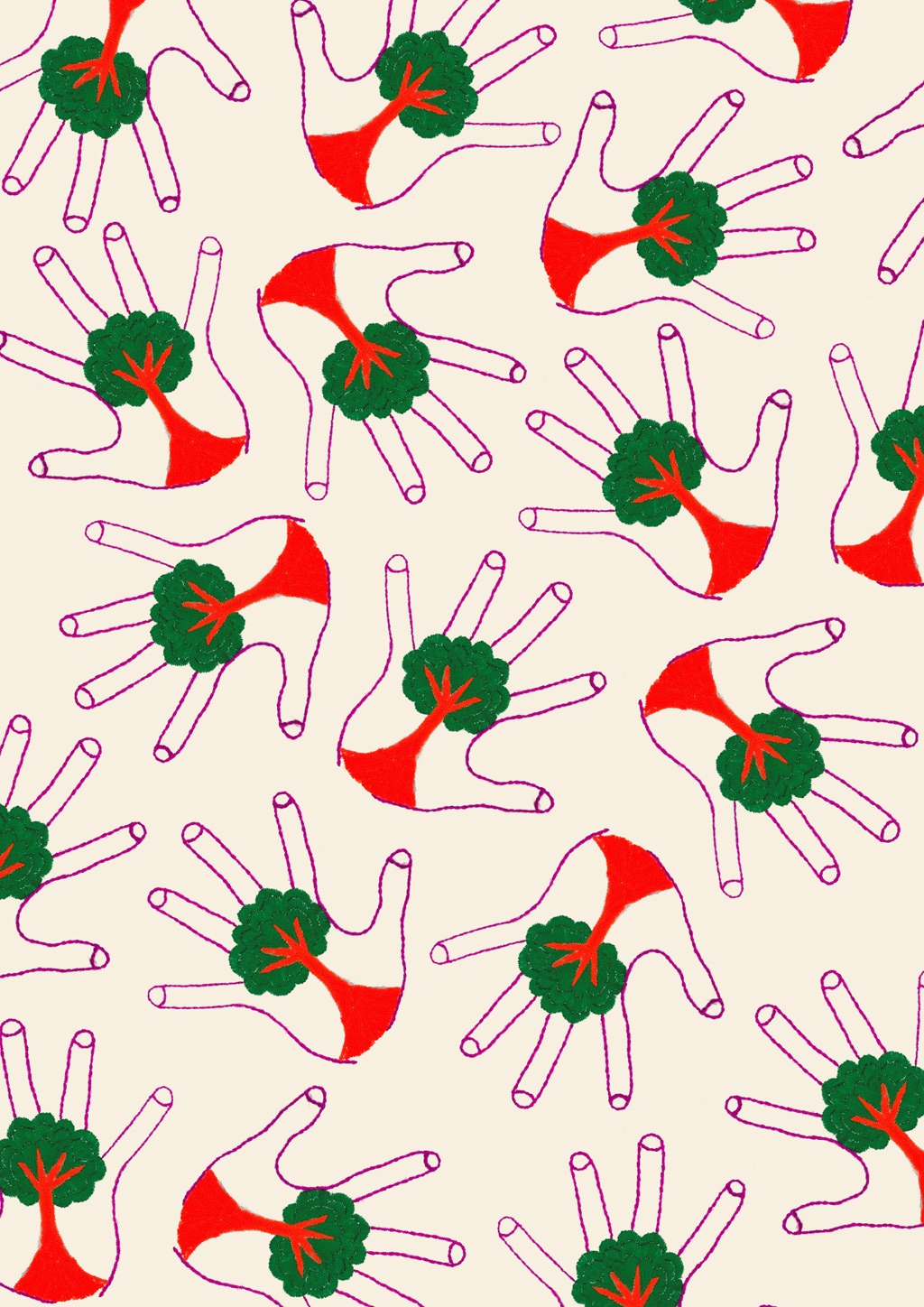
“My hand symbolises that I am not useless.”

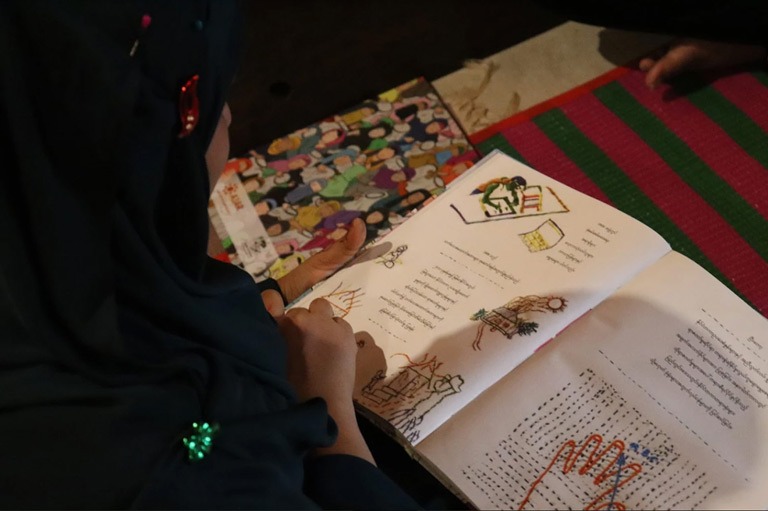
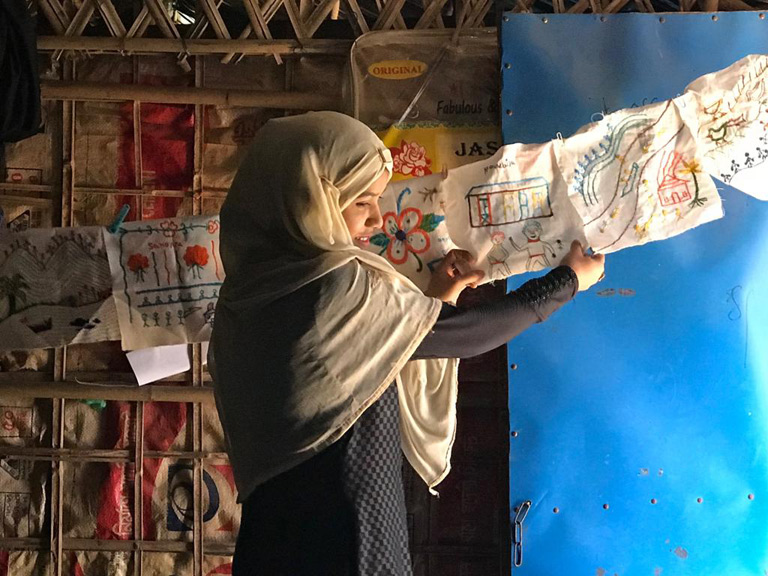
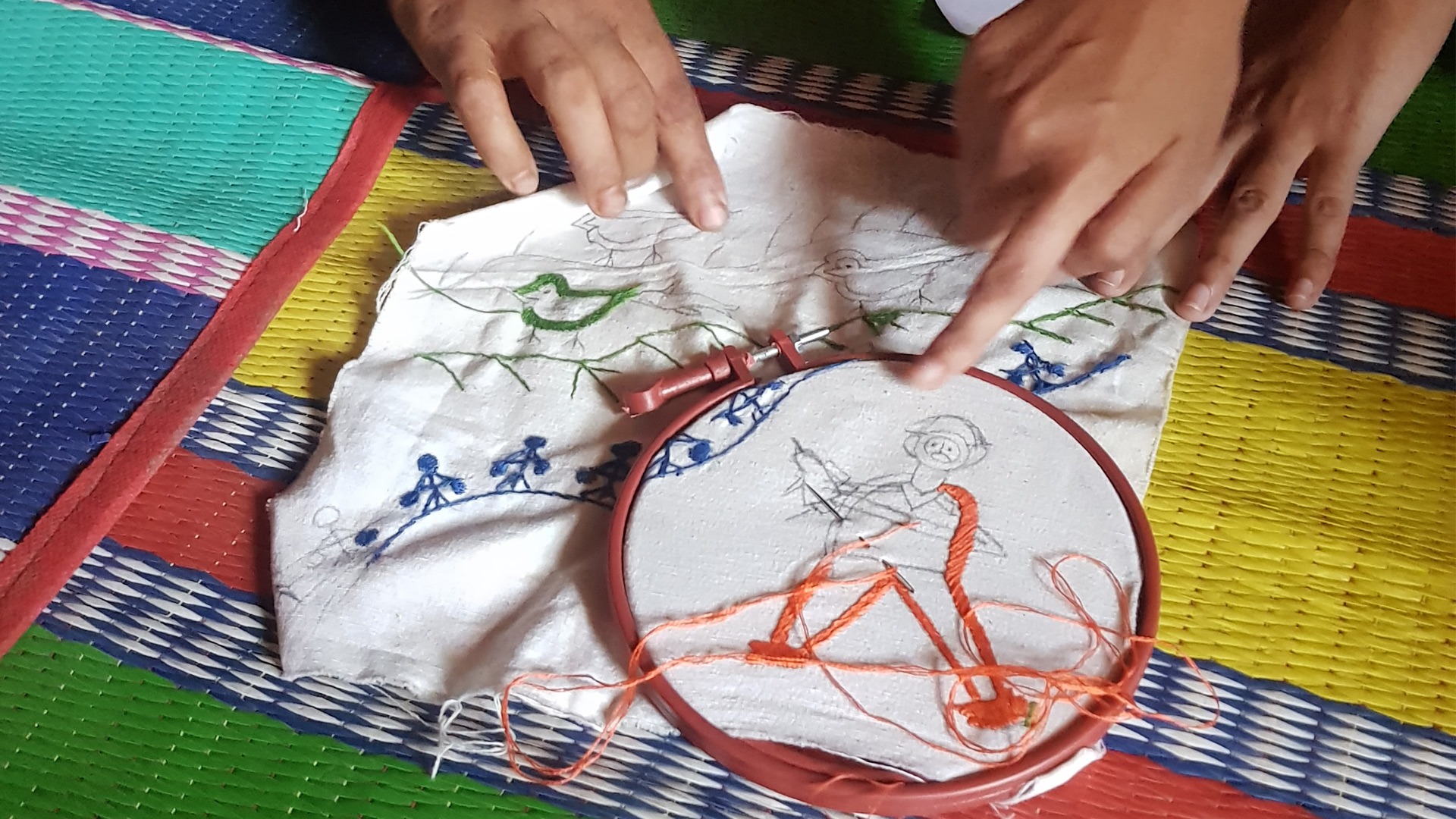
The quilt-making activity reminds Basma that she can do anything with her hands, that she can sew well, that she can draw, that she can create something beautiful.

These activities help her reflect on the good memories she cherishes from back home. She misses her country. Basma draws a bird. “This is my symbol” she says, “I want to be as free as a bird.”

Basma misses her big brother. Although she doesn’t know if her words will reach him, Basma wrote him a postcard during one of the camp activities.

“As-salamu alaykum. I am writing to you, my big brother, from very far away. Dear big brother, are you well? Your younger sister is well.

It’s been a long time since you last phoned us. Please, call this number 0183xxxxx as soon as you receive this letter. I miss you day and night. I am always doing Duwa (pray) for you. Please, do Duwa and pray for me. Looking forward to receiving a reply from you, Your sister Basma.”

Bayan

Bayan

“The Myanmar military tortured us and I want justice. I want education for the children, I want our rights”

Bayan is unequivocal in her demand for justice. She lost everything. Why? Although learning about human rights and justice has empowered Bayan, she also sees the benefits of practical activities like quilt-making and embroidery. “Giving us a sewing machine would be good for our future, we look forward to our lessons,” she says.

Bushra

Bushra

“We didn’t want to come to Bangladesh. The Myanmar Government and the military forced us to come to here. I lost my house, land, clothes, books, property, money everything.

But international justice mechanisms could ensure our rights. With full citizenship rights we could live a happy life in Myanmar again.”

Baheera

Baheera

“My name is Baheera. I am unmarried. I live with my parents and my brothers and sisters in a refugee camp in Bangladesh. I used to go to school back in my village, but the Myanmar government caused many problems for our Rohingya people and so I had to drop out of school.

Now I wish I could work, but I am unemployed. I spend a lot of time thinking what our life could be like.”

Dalal

Dalal

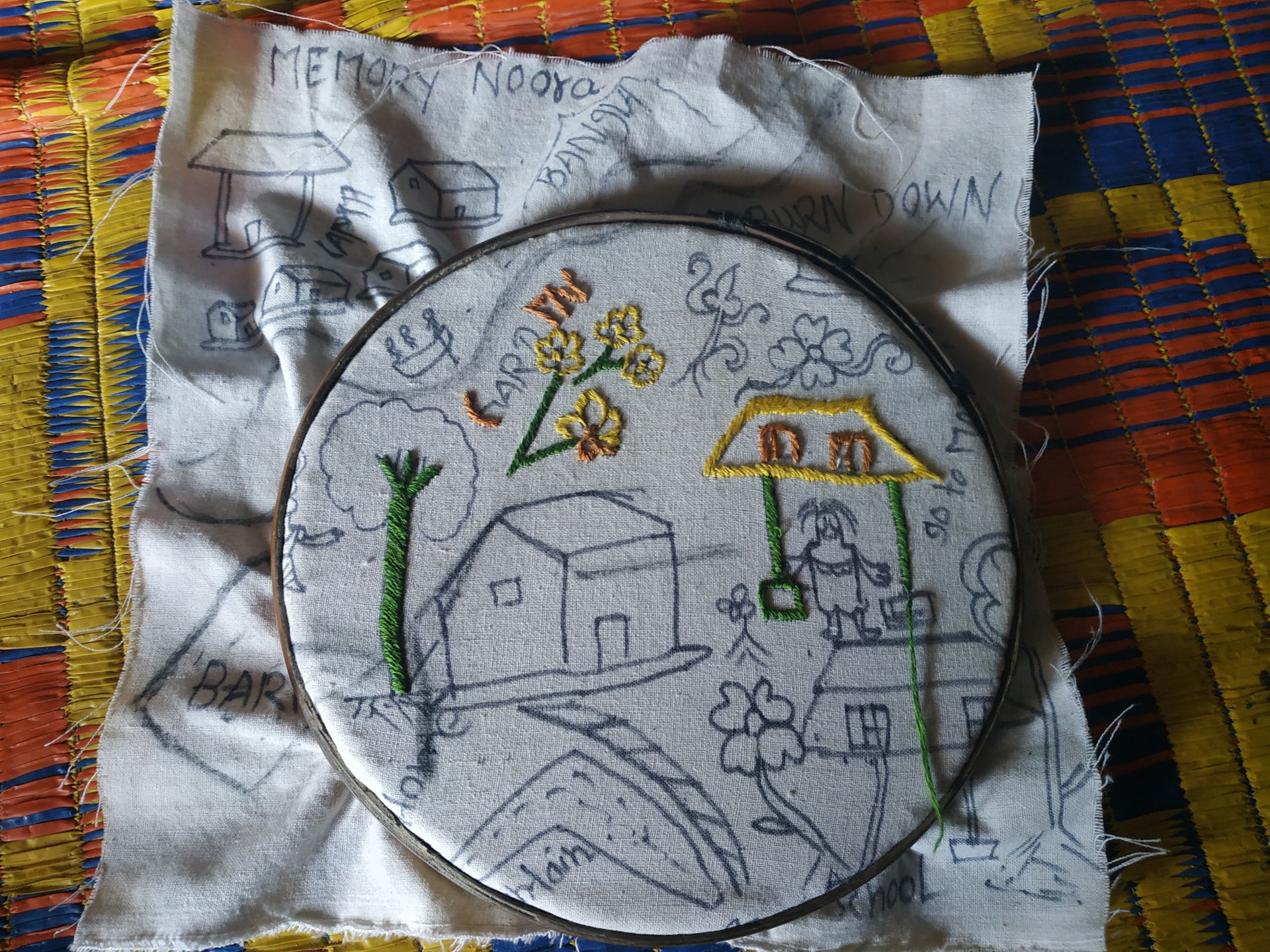
“I am Dalal from Myanmar. This is the house where I used to live with my family, my husband and four children. We had land that we farmed to make a living. One day the military came to our village and opened fire, shooting in every direction.

They burnt down our house and destroyed everything. We ran away into the jungle and waited until the military had gone. Later on, we left for Bangladesh.”

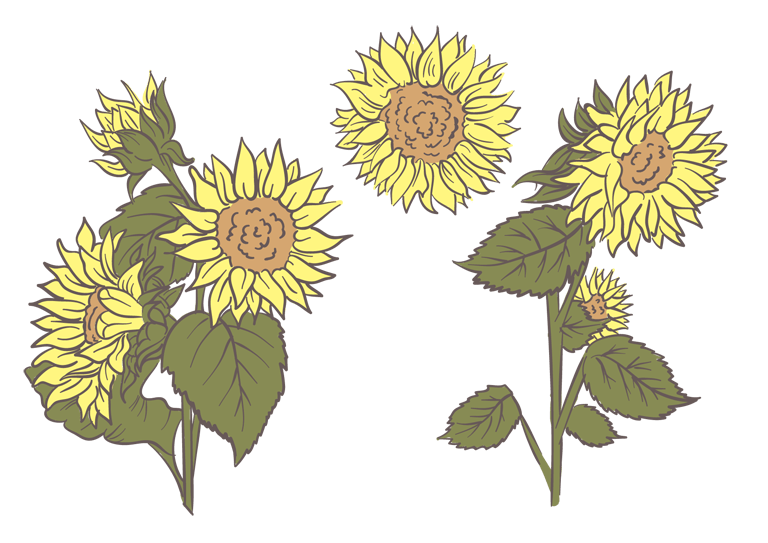
Dalal teaches in one of the camp schools. She loves making things with her hands She especially loves to embroider flowers. The sunflower is her symbol of hope.

Dalal is sad and angry that the Rohingya are forced to live as refugees. “Rohingya people were shot and stabbed, women and girls were raped, our houses were looted, and we were driven out to neighbouring countries.

We have to live as refugees. I request that international community take action against the Myanmar military for committing genocide against the Rohingya, to recognize the Rohingya people as citizens of Myanmar and to help us go back to home safely and quickly.”

A postcard to the trainer. “As-salamu alaykum. I am writing to you in tears. The reason is: I couldn’t sleep or eat after I arrived in Bangladesh. I don’t know what to do, I am desperate. I don’t have any income. But after I spoke about my suffering, my sadness, my feelings, I felt much happier and was able to sleep again. When the training finished I cried. I pray for you my trainer, I say salam to you. We all pray for you.”

Dalia

Dalia

“The Myanmar government revoked our ID cards, and with it our citizenship rights. They gave us a blank card instead – meaning ‘no rights for Rohingya’. But Myanmar is my home. I had a garden full of flowers. I miss tending to the flowers, I miss the trees from my homeland. Because the military tortured us and attacked the village, we were forced to escape to Bangladesh and to live in a camp where there is no garden, where there are no flowers. Please pray for us.”

“The AJAR workshops make me feel happy and sad at the same time. Through these activities I remember the power of my hands.

There is much we could do, if we had the opportunity. I hope that other young women living in the camps can learn dress-making and other needlecrafts too.”

Dalila

Dalila

Dalila is a widow with four children. It took 16 days for her to reach Bangladesh and during the escape to Bangladesh she was separated from two of her children. She has since been reunited but is worried for her children, the unsanitary conditions in the camp and the lack of education.

“I had a home and possessions in Myanmar, but here I have nothing. Along with our things, I had to leave my children’s future behind too.”

Dania

Dania

“When I was a little girl, my father told me that he wanted me to be a doctor so that I could provide a health service to our community that respects our Islamic culture. ‘I want you to have independence,’ he said. ‘I want to be in control of your destiny and the only way you can do that is if you are educated’. I was lucky to have such supportive parents.

However, despite graduating from senior high school in 2015, I was unable to continue my studies because we are Rohingya and the Myanmar government prevents us from studying at university.”

“We live our lives in uncertainty. The shelter is temporary, built with tarpaulin and bamboo. We have very few opportunities here.

We live not only as refugees, but as inmates in a prison without walls. I am a peace lover, but I see these conditions bringing out the worst in some people, and women are increasingly vulnerable. I feel like a whole generation is being lost.”

“I wouldn’t wish living as a refugee on my worst enemy. We live in miserable conditions, but I don’t give up. I believe education can still make the future bright, that we can develop a movement to prevent violence.

It’s important to reduce gender inequality and to provide women with the leadership skills that will enable them to be future leaders. It is about preserving dignity and to know human values. I hope that our recreational activities will impact positively on their lives – a peaceful and fulfilled life.”

“Following the attack on our village, it took us 12 days hiking over mountains and through rivers on foot to reach safety in Bangladesh. We had no food. I am so grateful to the government and people of Bangladesh – they have helped us with many things and have saved our lives.

I do not have adequate words to thank them.”

“I’ve been working for my community for many years now and I established a civil society initiative to support women, the Rohingya Women’s Association for Education and Development (RWAED). We work to harness the role of women as changemakers, as innovative members of the community and to empower women and girls.

We provide women with opportunities to develop their talents, to hold on to hope and not to give in to defeat and hopelessness.”

“I am deeply grateful to be part of AJAR, for giving me a chance to work together and support Rohingya women. My message to AJAR: thank you for your extraordinary support and the unconditional love that you have shown me during this vulnerable time.

I believe us Rohingya women are the most persecuted and helpless women minority in the world. Thank you for letting me share my feelings without fear.”

Dareen

Dareen

Dareen was born in March 2005. She is the youngest of 9 children. Her father was a big business man who owned 15 boats and a truck. In fact her father was very well-known in Arkan.

The family had a good income and she was still in grade 6 at school when the violence that forced her and her family to flee to Bangladesh erupted. When she first arrived in Bangladesh she got a job but after a year the job came to an end and now she is unemployed and living with her family.

Dina

“I come from a small family – my parents, two older brothers and me. Both my brothers were teachers. My father wanted me to complete my studies, but because of the security situation I had to leave of school. I wanted to contribute to my community just like my brothers, so I taught women from home.

When I got married my husband encouraged me to continuing my teaching activities. He is a kind person. But on 25 August 2017 our happiness was broken. The military attacked our village and we were forced to flee to Bangladesh. My husband and I are unemployed, but my eldest son is teaching here in the camp.”

Dina
Duaa

Duaa

Duaa taught privately from her parent’s home in Myanmar. Following the violence in August 2017, Duaa and her parents made their way to Bangladesh, crossing rivers and climbing mountains with no food, finally making it over the border in October.

After a year in Balukali camp, Duaa married a man from Kutupalong camp. She is happy with her new life though she has had to give up her job teaching since leaving Balukali camp. Duaa still teaches women from home on a voluntary basis, but things are very difficult for her and her family since the Covid-19 pandemic as they no longer have any income on which to survive.

Farida

Farida

“I completed two and half years of a Botany degree. But because of government regulations, as a Rohingya I was not allowed to complete my studies. This was the saddest time of my life. A year later I married my childhood sweetheart, and we started to teach children in the village.

We had a beautiful house and later, a beautiful daughter. In spite of the restrictions we made the most of our lives. Even before the attack on our village, many acts of violence were perpetrated against innocent Rohingya people. I could not sleep well. In the end we had no choice but to escape to Bangladesh. It was the worst nightmare of my life.”

“It’s been three years now, and there is still no resolution, no sign that we will return to our country. I don’t want to say any more about this situation.

I am very grateful to the government and the people of Bangladesh who saved our lives by supporting us, but as everyone knows, living as a refugee is the worst situation for a human being to be in. The world’s leaders should make the efforts to solve our problems as soon as possible.”

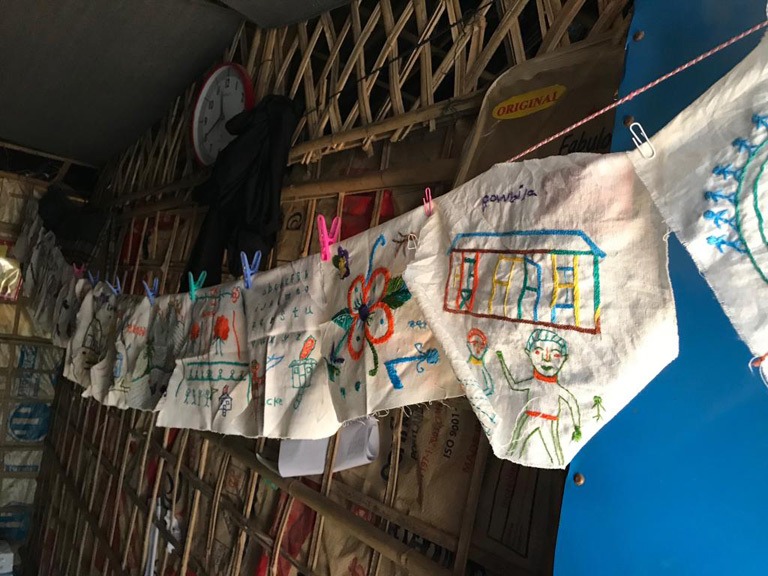
Farida is traumatised and angry by what she experienced. She describes the embroidery she made for the quilt as ‘a victims’ death scene’. “I saw many dead bodies floating in the river and on the roads. The whole experience was terrifying. I demand justice by sewing the stories of the victims with my own hands,” she says.

“I am always sad but I put on a brave face so no-one knows how that I am crying in my heart for what I have lost – my home, the school, our rights. We should respect and accept everyone’s differences, we are all part of society.

We Rohingya are only 1 million Muslims, there are many more Buddhist than Muslims in Myanmar. How can we be a threat to them?” We just want to be happy.”

Fairouz

Fairouz

Fairouz is grateful for the education she is receiving in the refugee camp.

“We were never treated like human beings in Myanmar, we were unable to get a good education. This is our time to be educated – though living in the camp is the price that we have to pay.

I want our rights back. I want justice for all their torture of the Rohingya people.”

Farah

Farah

Since living in the refugee camp, Farah and her husband have been volunteering with MSF. The volunteer stipend doesn’t cover their needs, but Farah is so inspired by the MSF hospital, which provides care to anyone without discrimination.

The hospital is a symbol of hope for Farah. Farah says treating people fairly is important, as discrimination will always cause problems and make it difficult to build trust.

Farah graduated senior high school, but was unable to study at university because of the conflict. From 2016 onwards, she and her family lived in a constant state of fear.

Many villagers, including one of her husband’s relatives, were abducted at night and killed. Farah now lives in a refugee camp with her husband and small son. She has no fear of hard work, but her and her husband are worried about her son’s future since the schools have been closed because of Covid-19.

Hala

Hala

“When we reached Bangladesh, we felt we had made it to the land of humanity. The people and government of Bangladesh provided us with basic necessities for survival. On that day, we began our lives as refugees. Now I am living in camp with my family.

I am still single and we are all unemployed, including my father and my brothers. We do feel better than before. But due to the lock down of COVID-19, the schools are closed and Rohingya children are deprived of an education. I am very concerned about our Rohingya children’s future.”

Hababah

Hababah

My name is Hababah. I was born in 1979. I am from a family of 10 – my parents, myself, six sisters and three brothers. My father was the village head, but he died in 2013 of diabetes. In August 2017, the Myanmar military burnt our village and our homes to the ground.

Now I am living in camp with my husband and our children, two daughters and a son. The eldest is 14 and the youngest, my son, is six. We feel much safer than we did before, but both my husband and I are unemployed and I am worried about my children’s education and what the future holds for them.

Haemah

Haemah

Haemah was born in 1992 and is from Bothidong Township. She has four sisters and three brothers. Her father was a farmer and her mother looked after the children at home.

She studied until 2nd grade but had to leave schools because of the financial crisis. At 18 she married a man from the same village. They have two young children, a boy and a girl.

Setara and her family walked 12 days and night to reach Bangladesh. She is very grateful to the people of Bangladesh but is worried about the impact of Covid-19 on her children, their education as well as their health.

Halima

Halima

“Salam, I am Halima. I am married and have three sons and one daughter, and we live together in Camp 13. I want to share my story. I had a happy childhood. We lived in a big house with lots of chickens.

I used to attend school with my friends, until the Myanmar government took away our education rights. Then one day the military attacked our village. It took us 12 days to reach Bangladesh, with no food. I always dream of my native land. I dream of my golden Myanmar. If I were a bird, I would fly back to my country. I always want to go to my Myanmar.”

Halima is happy, friendly and loves to smile. She enjoys working with the community. Halima believes that by being friendly and open to everyone, people will feel they can share their problems with her, without hesitation. “We are all human beings,” she says, “we should learn to cooperate and accept our differences.” In her community, everyone loves her.

“My parents lived in the town and I was unable to go to them before we fled to Bangladesh, it was too dangerous. People were being killed, it was slaughter. I had to leave them behind. The Myanmar military is responsible. They tortured women and children. They were innocent. Why did they do that to them?

I try to remain hopeful by focusing on what I can do. Serving the community, sewing, cooking, feeding the children, eating, writing, washing the dishes, washing the clothes. I can do all of this with my hands.”

“I used to attend school with my friends when I was a child, but the Myanmar government took away our education rights and I had to leave school. Education and communication are important aspects of human rights, so that a system can be established to uphold and value people’s rights.

The school symbolizes my hope, that one day when we go back to our country, Myanmar, we can get our right to education there.”

“As-salamu alaykum. I am writing this letter to all the people who are suffering because of war. May you all live in peace and be happy. Be strong and cope with the trauma and desperation that fate has chosen for us. Don’t just focus on our suffering, but think of this as a life lesson.

Send our good will and pray for prosperity and peace in the world. Please, be strong and confront your life with positive attitudes on everything. From, A refugee from the world’s biggest refugee camp. A person who has the same life as you”